Nullam dignissim, ante scelerisque the is euismod fermentum odio sem semper the is erat, a feugiat leo urna eget eros. Duis Aenean a imperdiet risus.
Nullam dignissim, ante scelerisque the is euismod fermentum odio sem semper the is erat, a feugiat leo urna eget eros. Duis Aenean a imperdiet risus.
 author
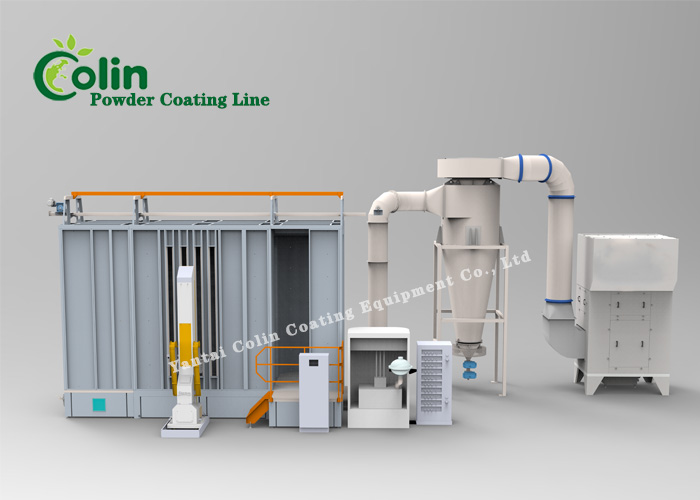
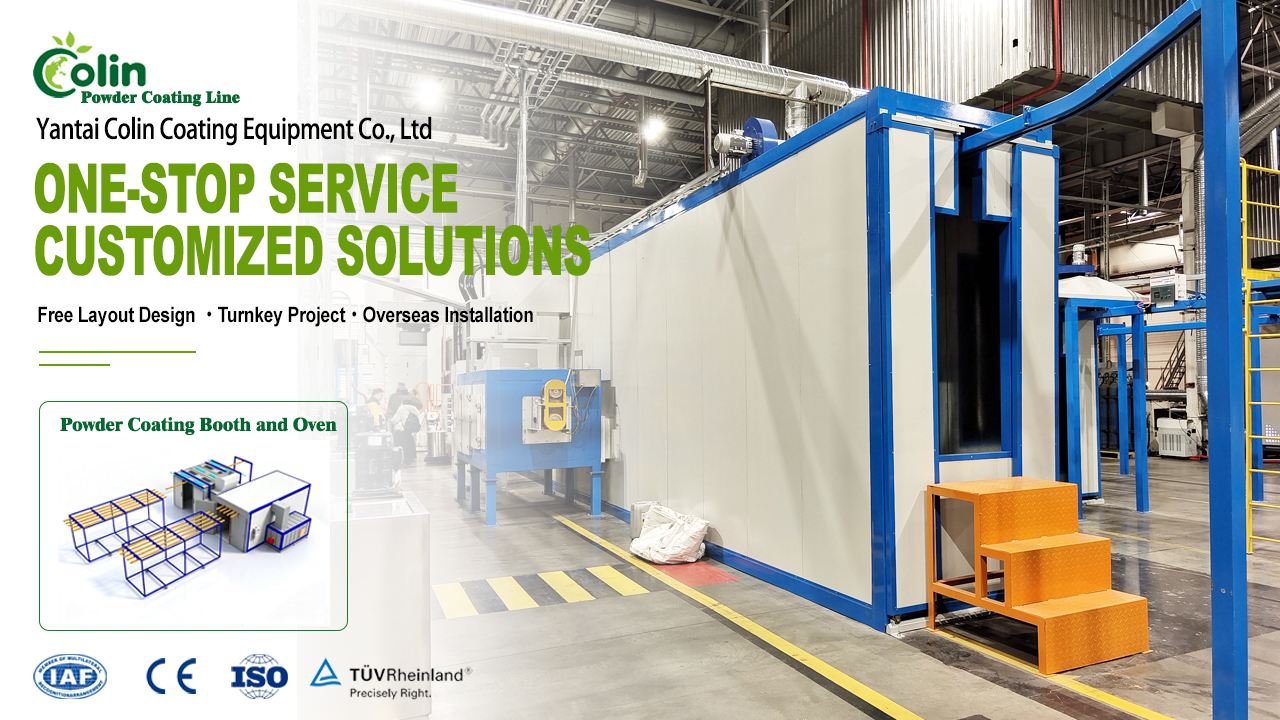
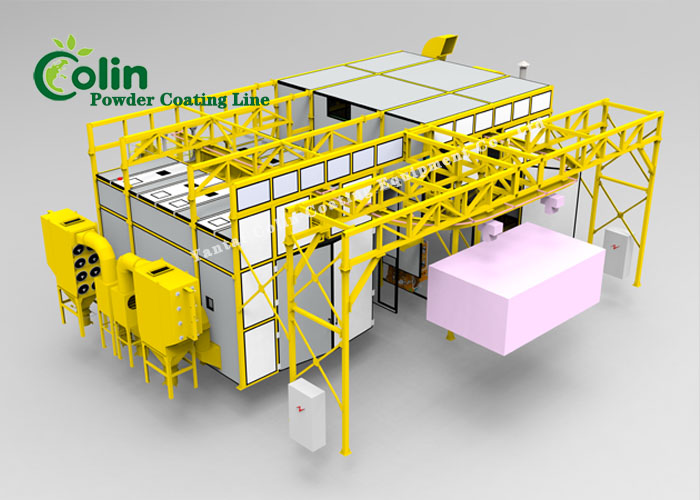
A powder coating booth is the control point between electrostatic application and a clean, repeatable finish. The right booth manages overspray, airflow, visibility, color changes, and operator safety around the actual workpiece, so selection should begin with geometry and production rhythm rather than a generic booth size.
For a project that needs coordinated booth, conveyor, and curing stages, Colin’s powder coating booth solutions can be matched to the workpiece, factory layout, and required coating process. This keeps the booth decision connected to the equipment that comes before and after spraying.
The booth opening, gun arrangement, hanger spacing, and access points must reflect the largest and smallest parts in the product mix. Flat panels, appliance housings, wheel hubs, aluminum profiles, and hardware with recesses do not present the same spray angles or touch-up requirements.
A practical selection also considers how often the product changes. A flexible batch operation may prioritize easy access and manual control, while a conveyorized line needs a stable booth path, predictable clearance, and a relationship between spray time and the curing schedule.
Airflow should pull overspray toward the recovery path without disturbing the powder cloud at the workpiece. Colin‘s lists an adjustable airflow speed of 0.3-0.6 m/s, giving the engineering team a defined range to relate to booth geometry, filter loading, part shape, and local ventilation requirements.
The enclosure, exhaust route, and monitoring functions work together to keep suspended powder inside the work area. Dust concentration monitoring and automatic emergency ventilation are useful safeguards, but the final safety design still needs to match the factory’s electrical, ventilation, grounding, and local compliance requirements.
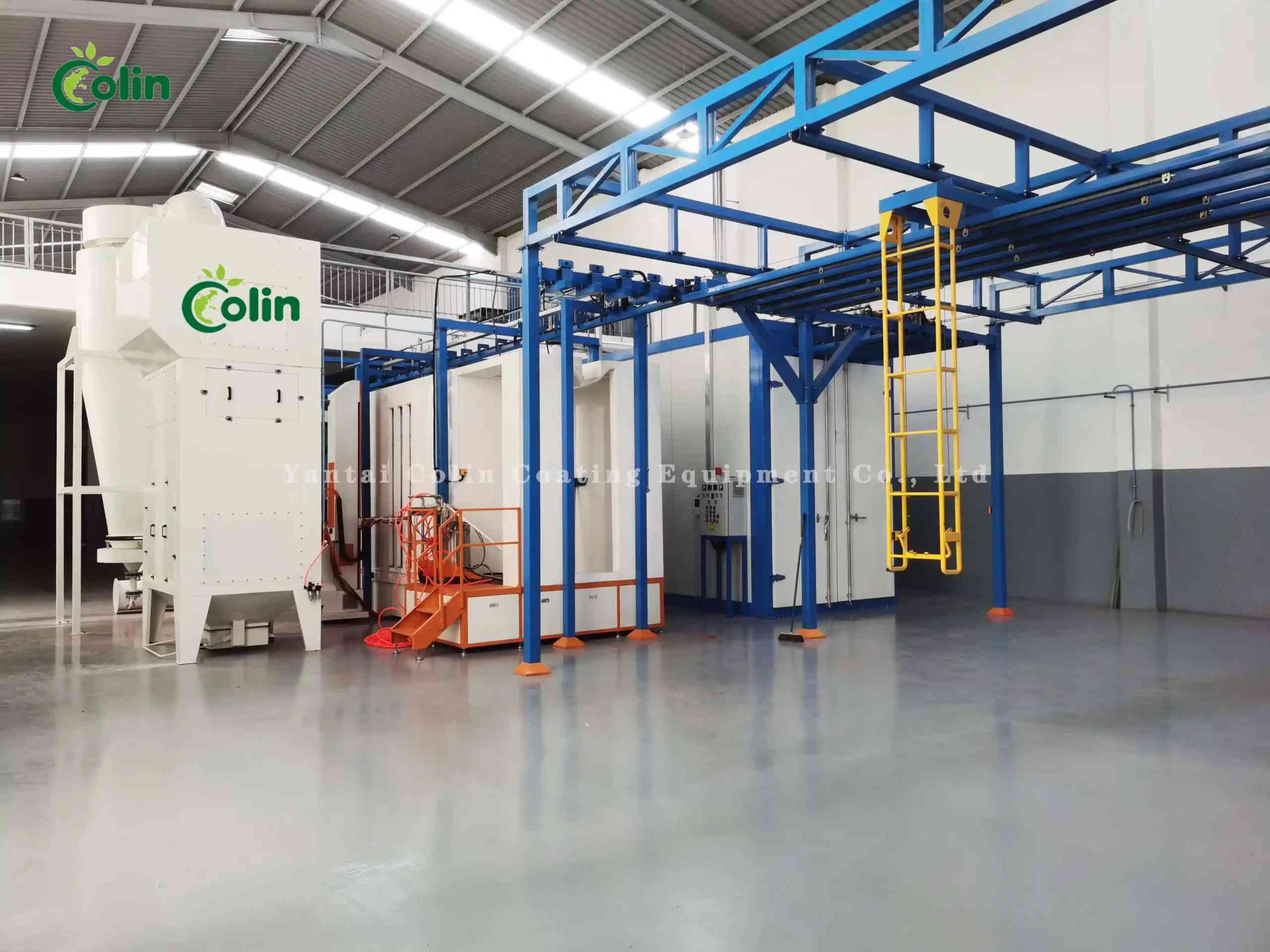
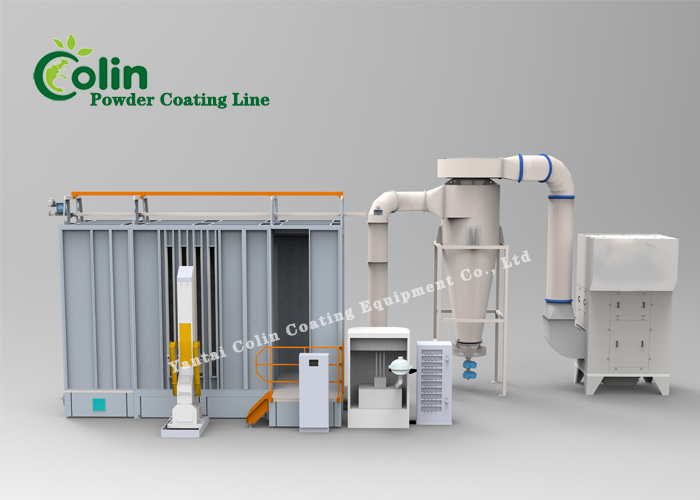
Overspray that does not adhere to the part should be captured before it spreads through the workshop. Colin’s two-stage powder recovery system combines cyclone separation with high-precision filtration, so the larger powder load and finer particles can be handled through separate recovery steps.
Actual recovery depends on the powder, gun settings, workpiece shape, airflow balance, filter condition, and the selected recovery configuration.
Color change is a practical test of booth design because old powder can remain on walls, ledges, filters, guns, and powder hoses. Colin uses an easy-to-clean inner wall, a quick color-change design, and pulse back-blowing self-cleaning to reduce the effort required between product runs.
The best sequence depends on the starting color, finishing color, acceptable contamination level, staffing, and the powder supply arrangement. A light color following a dark color normally calls for more disciplined cleaning, while a stable booth layout makes the cleaning steps easier to repeat and verify.
Fast changeovers are especially valuable when one facility coats appliance shells, aluminum profiles, hardware, furniture parts, and mechanical casings in the same week. In these situations, the booth should support clear access, controlled powder routing, repeatable cleaning, and enough visibility for operators to confirm coverage before the part moves to curing.
A clean view of the workpiece helps operators identify thin coverage, missed recesses, and edge buildup before curing. Colin’s powder coating booth uses shadowless explosion-proof lighting and an explosion-proof observation window, while the product also includes dust monitoring and automatic emergency ventilation.
These features support safer operation, but they do not replace site engineering. The booth should be reviewed together with extraction, electrical layout, grounding, access doors, maintenance clearances, and the procedures used for filter service and powder cleanup.
PLC-based intelligent control can connect booth conditions with spray functions, alarms, conveyor movement, and recovery equipment. The value is process visibility: operators can see whether a change in airflow, powder supply, or line speed is likely to affect the finish before a large batch is completed.
Controls should be selected around the actual workflow rather than added as a generic automation package. A manual or semi-automatic line may need simple, accessible controls, while a high-throughput line may require recipes, interlocks, alarm records, and coordinated signals between the booth, oven, and conveyor.
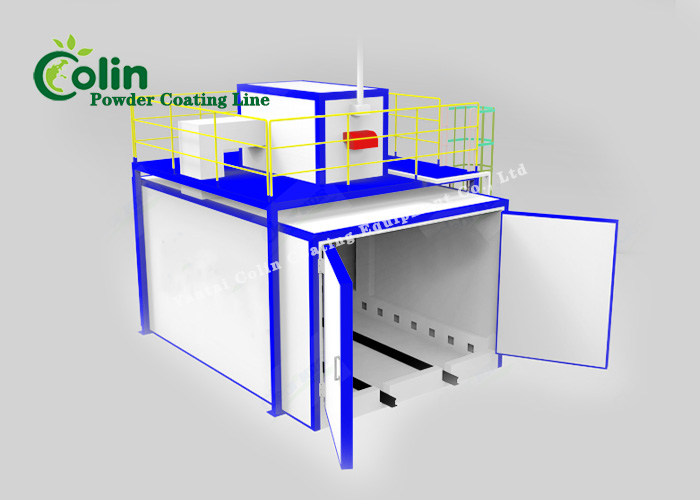
A booth cannot correct a poorly prepared surface or an unstable cure. Pretreatment must leave the part clean and dry, the conveyor must present each surface consistently, and the curing oven must provide the dwell conditions required by the selected powder; otherwise, a well-designed booth may still produce an uneven result.
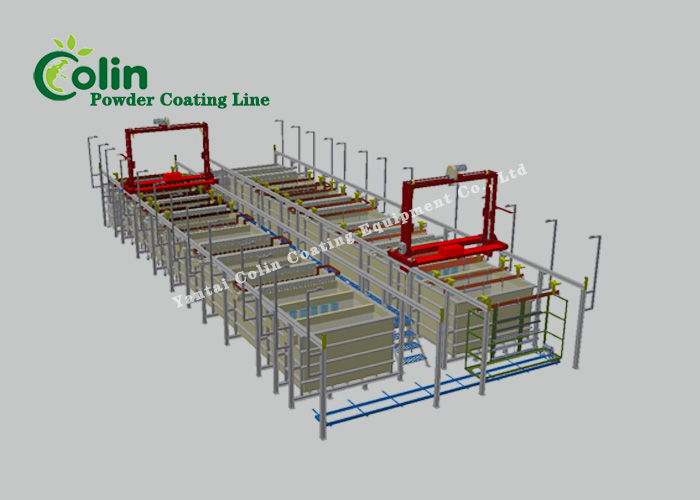
Colin’s pretreatment system can be considered alongside the booth when oil, dust, oxide, or other surface contamination is part of the process challenge. The goal is a connected route from surface preparation through application and curing.
Colin’s selection process can start with material, dimensions, weight, shape complexity, expected output, coating requirements, workshop space, and available utilities. Those inputs help determine the booth structure, airflow range, recovery arrangement, spray access, conveyor relationship, and the level of control that is practical for the site.
The same information is useful when comparing a new booth with an existing line. A clear 2D or 3D layout can expose service conflicts, poor loading routes, insufficient clearance, or a mismatch between booth capacity and oven dwell time before equipment is installed.
The best powder coating booth is the one that keeps application, recovery, airflow, cleaning, safety, and downstream curing in balance. By checking the workpiece mix, recovery configuration, adjustable airflow, color-change routine, and factory interfaces together, a finishing team can build a more predictable process instead of optimizing one component in isolation.
Contact Colin about your production requirements and find a powder coating booth solution that integrates smoothly with your complete finishing line.
A: Colin lists an adjustable airflow range of 0.3-0.6 m/s for the powder coating booth. The useful setting depends on booth geometry, part shape, spray equipment, filter loading, and exhaust design. Airflow should contain overspray without pulling powder away from the workpiece, and the final setting should be verified during commissioning.
A: Color-change efficiency depends on inner-wall access, powder hoses, guns, filters, the starting and finishing colors, cleaning discipline, and the acceptable contamination level.
A: Applications including appliance housings, aluminum profiles, doors, windows, curtain walls, automotive components, wheel hubs, hardware, office furniture, and mechanical equipment casings. Suitability still depends on part dimensions, weight, geometry, hanging method, coating requirements, and whether the booth can provide the required spray access and clearance.