Nullam dignissim, ante scelerisque the is euismod fermentum odio sem semper the is erat, a feugiat leo urna eget eros. Duis Aenean a imperdiet risus.
Nullam dignissim, ante scelerisque the is euismod fermentum odio sem semper the is erat, a feugiat leo urna eget eros. Duis Aenean a imperdiet risus.
 author
The right automatic powder coating line is chosen by matching pretreatment, spraying, powder recovery, curing, conveying, and control to the workpiece and production rhythm. For manufacturers coating metal parts continuously, an integrated line can improve process consistency because each stage is planned as part of the same finishing route rather than added as a disconnected machine.
For a line that must fit real workpieces and factory conditions, Colin’s automatic powder coating line solutions provide a practical starting point for evaluating the complete process.
Part dimensions, weight, material, shape, and hanging method determine the usable process space. Flat panels, aluminum profiles, appliance housings, wheel hubs, hardware, and mechanical casings require different spray angles, hanger spacing, conveyor clearances, and oven exposure.
The smallest and largest parts should both be considered before the line is laid out. A system built only around one representative component may create poor access for recesses, unstable spacing between hangers, or unnecessary empty oven volume when the product range changes.
Automation is valuable when repeatable movement, steady spray coverage, and continuous curing are priorities. It is not automatically the best answer for every factory: a mixed product range may need manual touch-up access, adjustable conveyor speed, or a semi-automatic arrangement that keeps operators close to complex surfaces.
The useful question is how the line should behave during a normal shift. Loading, spraying, color changes, curing, unloading, cleaning, and maintenance should follow a rhythm that operators can repeat without forcing one stage to run far faster or slower than the others.

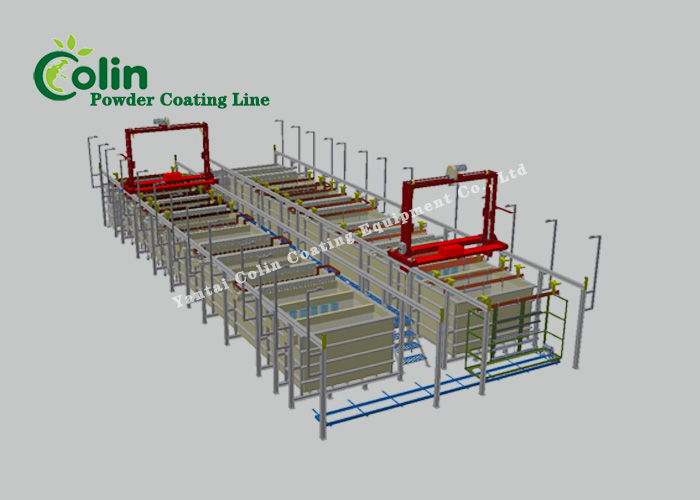
Powder cannot compensate for oil, dust, oxide, or other contamination left on the metal. Depending on the substrate and finish requirement, a pretreatment route may include degreasing, rinsing, surface conditioning, phosphating or passivation, final rinsing, and drying before the part reaches the spray booth.
The process choice affects more than surface cleanliness. It also changes water handling, heating, ventilation, drainage, drying capacity, maintenance access, and the distance between loading and coating. A well-planned pretreatment system gives the powder application stage a cleaner and more predictable surface to work with.
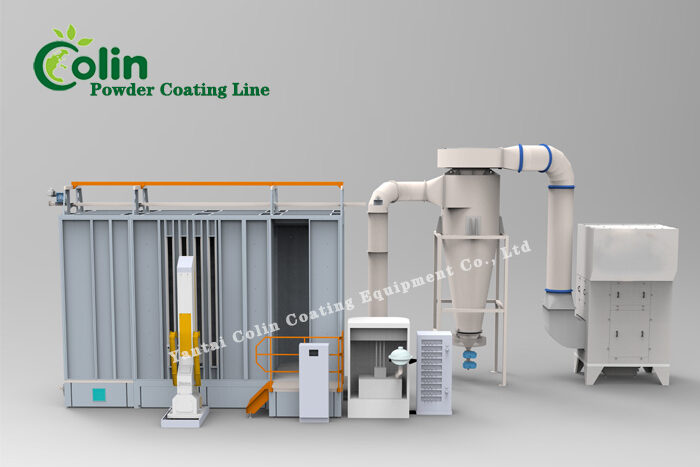
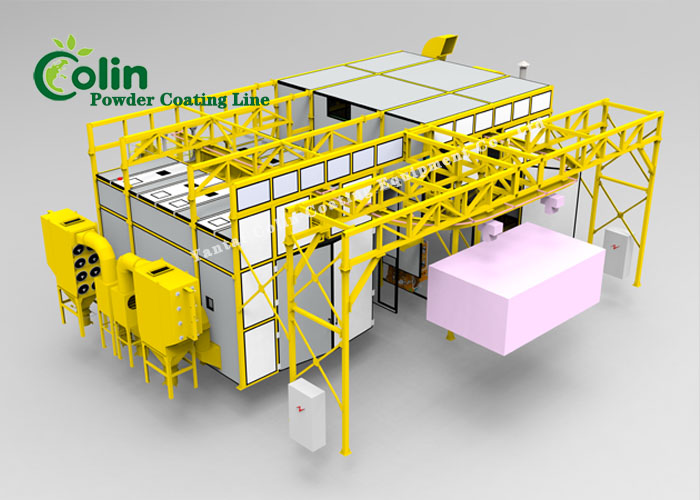
The powder coating booth is the control point for overspray, visibility, operator access, and color-change work. Airflow should contain suspended powder and guide it toward the recovery path without pulling the spray cloud away from the workpiece or creating uneven coverage around edges and recesses.
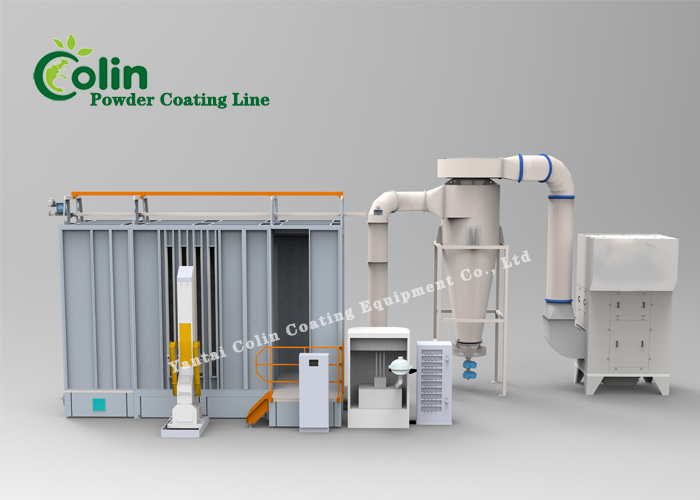
Colin describes adjustable booth airflow, easy-clean inner walls, pulse back-blowing self-cleaning, dust monitoring, explosion-proof lighting, and automatic emergency ventilation. Cyclone separation combined with secondary filtration can support a cleaner recovery route, while the actual operating result still depends on powder properties, gun settings, filter condition, and booth configuration.
A closer look at booth structure and recovery is available in Colin’s powder coating booth design, especially when overspray control and frequent product changes affect daily productivity.
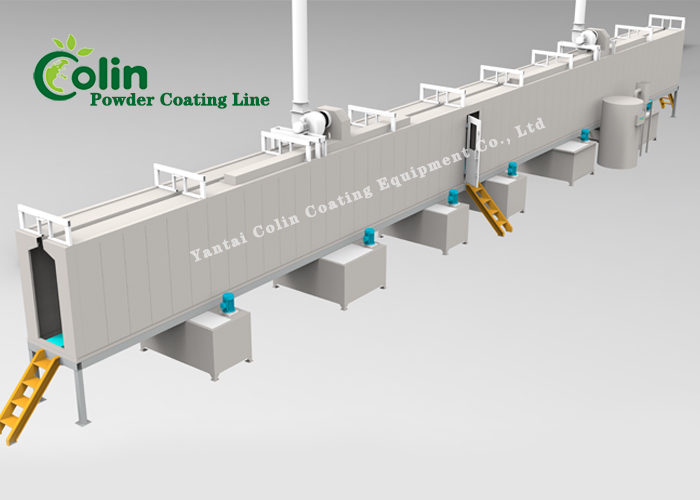
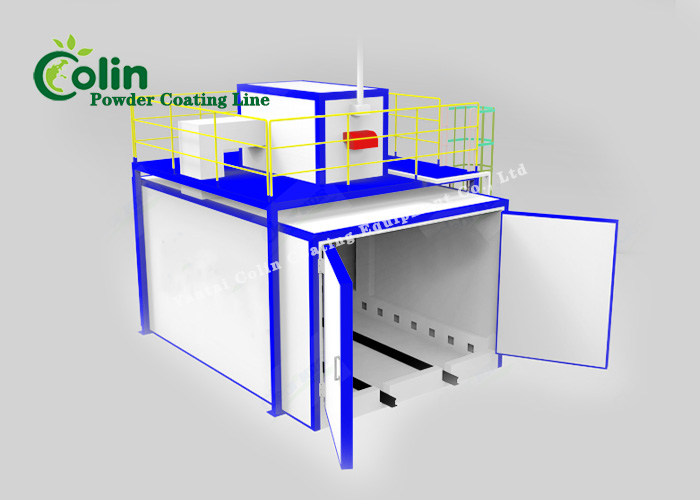
The curing oven must provide the powder with the required thermal exposure, not simply a high chamber temperature. Oven length, airflow, insulation, burner or heater control, part mass, hanger spacing, and conveyor speed all influence whether the metal reaches the curing conditions specified for the selected powder.
This is why booth capacity and oven capacity should be considered together. If spraying is fast but the oven cannot maintain the required dwell time, the line may accumulate parts, slow the conveyor, or create inconsistent finish quality. A coordinated layout keeps the process moving at a pace the complete system can support.

Color change is often where an otherwise capable powder coating line loses time. Residual powder can remain on booth walls, filters, guns, hoses, recovery equipment, and ledges, so the cleaning sequence should be considered during equipment selection rather than treated as an afterthought.
Easy-clean surfaces and a practical powder routing arrangement make the changeover easier to repeat across dark, light, and specialty colors. The best routine depends on the product schedule, acceptable contamination level, staffing, and powder center configuration, but the goal remains the same: remove old powder from the areas that can affect the next finish.
PLC-based control can coordinate conveyor movement, booth functions, curing conditions, alarms, and recovery equipment. Its value is not automation for its own sake; it is the ability to see when a change in line speed, airflow, powder supply, or oven condition may influence the finish before a large batch is completed.
Control design should reflect the factory’s operating habits. A flexible line may benefit from simple, accessible controls and clear alarms, while a higher-throughput system may need recipes, interlocks, status signals, and coordinated communication between pretreatment, spraying, curing, and conveying.
An automatic powder coating line has to work inside a real building with columns, doors, ceiling limits, utility points, loading routes, ventilation requirements, and maintenance clearances. These conditions influence the process path and should be reviewed alongside the workpiece instead of after the equipment layout is already fixed.
Colin is most relevant when the project needs the booth, recovery route, curing stage, pretreatment, conveyor, and controls to be considered together. The practical selection inputs are the material, dimensions, weight, geometry, hanging method, output expectations, coating schedule, factory space, and available utilities.
An automatic powder coating line creates value when its stages support one another. Matching pretreatment, booth airflow, powder recovery, color-change cleaning, curing, conveying, and control to the actual workpiece mix leads to a more stable finishing process and makes future adjustments easier. Colin can be considered when the line must be shaped around both production needs and factory conditions.
Explore a coordinated powder coating line approach with Colin and connect the finishing process to your workpieces and operating environment.
A: Begin with the material type of the part to be coated, its dimensions, weight, shape, mounting method, coating specifications, production needs, color chart, shop layout, and utilities on hand. Drawings or photographs will help in understanding the cavities and profiles that must be considered.
A: Pretreatment is the process whereby contaminants such as oils, dust, oxides, and others are removed prior to coating with powder. The processes include degreasing, rinsing, surface conditioning, phosphating, passivation, and drying, among others. This may be done in combination based on the material type and the desired coating.
A: The recovery unit captures overspray and reroutes it away from the workspace via a process of separation and filtration. This can simplify housekeeping and handling of powder, but it will depend on many factors such as the type of powder used, airflow, spray pattern, filtration, and the recovery setup.
A: Manual methods are appropriate for flexible and low-volume work, whereas semi-automatic assembly lines involve movement or application of substances using machines controlled by operators. The use of an automatic assembly line would be ideal where there are requirements for flow, repeatability, and coordinated control. The selection of assembly type should be based on several factors.