Nullam dignissim, ante scelerisque the is euismod fermentum odio sem semper the is erat, a feugiat leo urna eget eros. Duis Aenean a imperdiet risus.
Nullam dignissim, ante scelerisque the is euismod fermentum odio sem semper the is erat, a feugiat leo urna eget eros. Duis Aenean a imperdiet risus.
 author
The right powder coating line for metal furniture is the one that matches the parts, the production mix, and the way workpieces move through the factory. Chair frames, table legs, shelves, and panels may share the same coating powder, yet their shapes, hanging points, and heat behavior can be very different. A suitable line combines the spray booth, handling method, curing oven, and controls around those real production conditions.
For a furniture factory, the best starting point is not a catalog label such as automatic or manual. It is a clear review of material, size, weight, shape complexity, surface quality, daily product mix, and future capacity. Colin uses these factors when developing a customized powder coating solution, so the equipment can support the workflow instead of forcing every part into the same process.

Metal furniture is often made from hollow tubes, welded frames, flat panels, brackets, and parts with narrow corners. Powder must reach visible faces, inside edges, and less exposed areas without creating heavy buildup at bends or thin coverage around joints. A line that handles only one simple geometry may become awkward when a factory adds a new chair frame or a deeper cabinet component.
The workpiece material also shapes the process. Colin’s powder coating line solutions can be planned around materials such as iron and aluminum, while the part’s dimensions, weight, and shape complexity guide the choice of handling and process arrangement. That makes the initial workpiece review an important engineering task rather than a formality.
Furniture buyers notice uneven color, missed edges, rough texture, and visible differences between parts that belong to the same set. These defects can appear when parts are hung too closely, when spray access changes from one frame to another, or when the curing stage is not matched to the product flow. A well-planned powder coating system gives operators a repeatable path for loading, spraying, curing, and unloading.

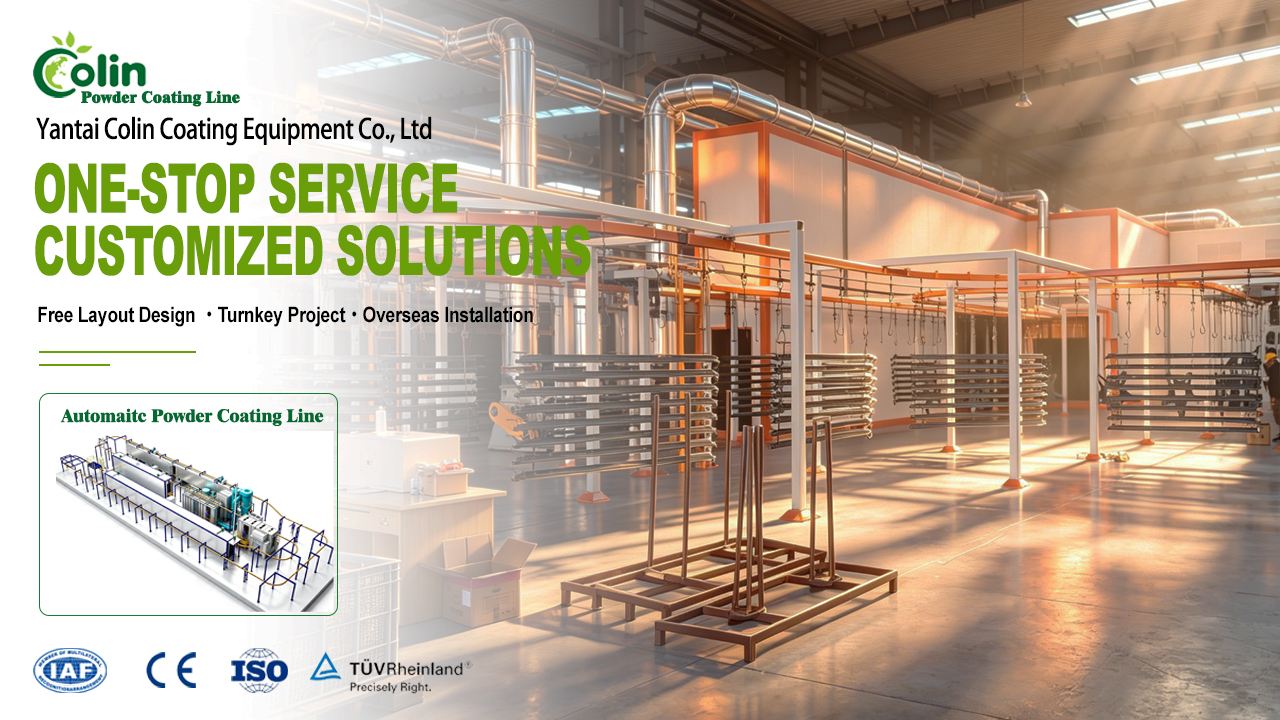
An automatic powder coating line is a strong fit when the factory repeats similar parts, needs a steady flow, and wants the conveyor to connect the main stages. Repeated chair frames or standardized shelving components can move through loading, spraying, curing, and cooling with fewer handling changes. The value comes from process continuity and repeatability, not from automation alone.
Automatic equipment still needs a product-centered layout. Hook spacing, clearance between parts, spray-gun access, booth width, and oven position all affect whether the line uses its capacity well. If the product range changes frequently, the line should leave enough flexibility for different hanging methods and reasonable changeovers.
A semi-automatic powder coating line can be more practical for furniture makers that handle several families of parts or change orders often. Operators can keep control of loading, positioning, or selected spray areas while the main equipment provides a more organized process. This balance is useful when product variety is too high for a fully fixed routine, but manual work alone creates inconsistent output.
The right choice depends on the proportion of repeat work and special work. A mixed operation may use automatic movement for stable product groups while retaining manual access for unusual frames, repair batches, or parts that need a different orientation. Colin also presents manual and semi-automatic line options, allowing the configuration to follow the actual production pattern.

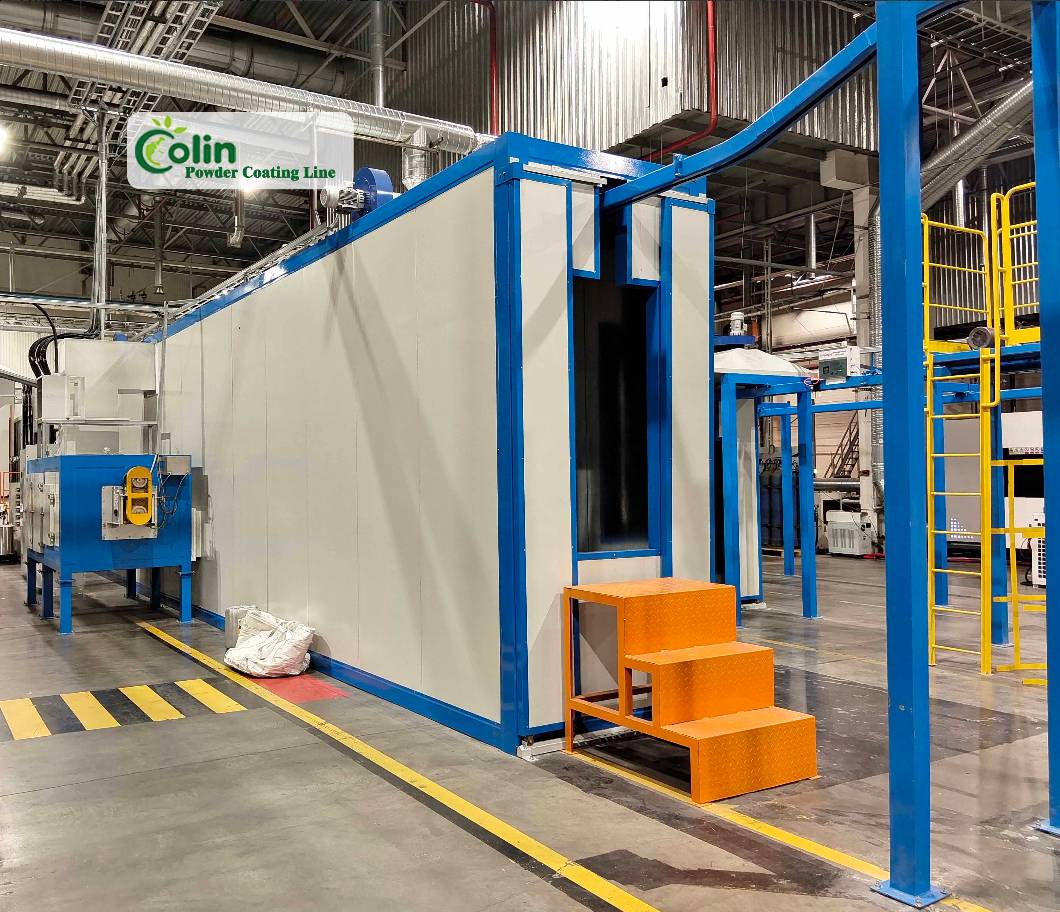
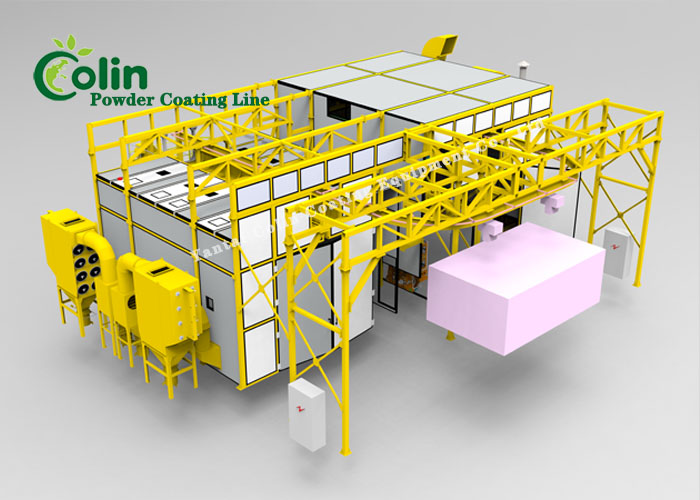
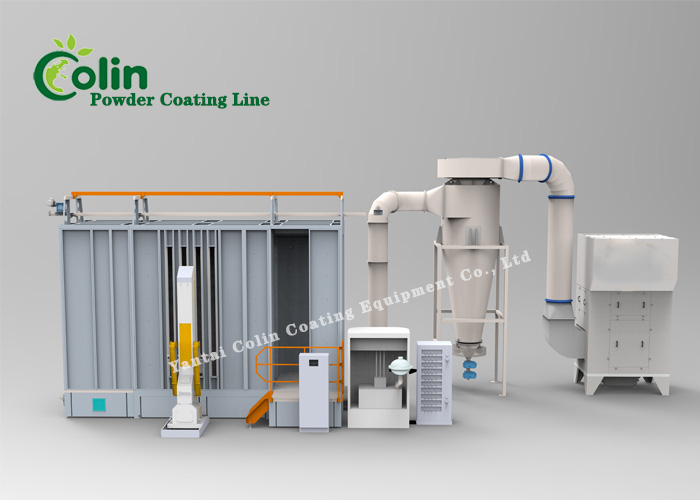
The spray booth should give the operator or automatic guns a clear path to the surfaces that matter. Furniture frames need room around corners, crossbars, and inner faces, while flat panels need stable positioning that prevents contact or shadowing. Air movement and powder recovery should support a clean working environment and predictable application without turning the booth into an isolated piece of equipment.
Good hanging begins with the part’s center of gravity and the surfaces that must remain open for coating. A chair frame may need a different hook orientation from a table leg, and a wide panel may require more spacing than a narrow bracket. The aim is to reduce swinging, contact, and hidden surfaces while keeping loading simple enough for daily use.
In practice, a flexible line benefits from defined loading zones and repeatable rack or hook positions. Those details help operators recognize how each product family should enter the process, which reduces improvisation and makes quality checks easier to compare.
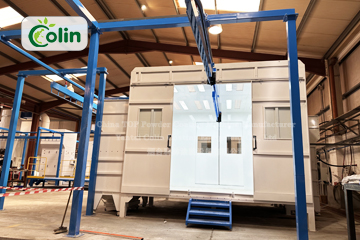
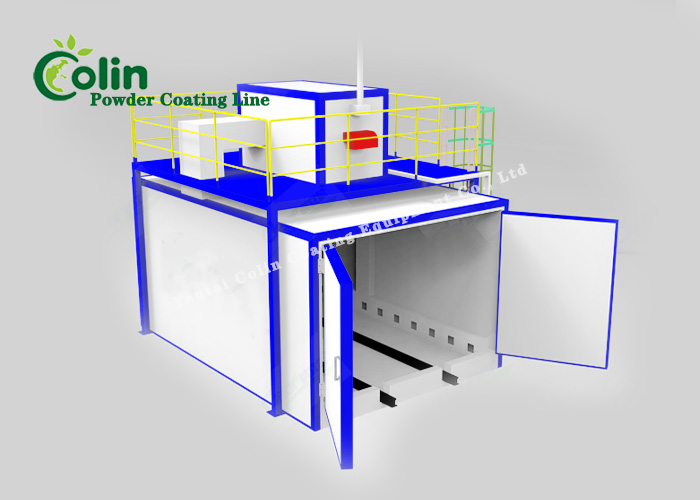
The powder coating oven turns the applied powder into a continuous protective finish. Its position, usable space, and relationship with the conveyor must suit the workpiece dimensions and the production rhythm. Large or irregular furniture parts need enough clearance for loading and airflow, while repeated smaller parts benefit from a stable, uninterrupted flow.
Colin’s powder coating oven options can be considered together with the line rather than as a disconnected heating unit. This matters because oven selection affects layout, transfer distance, handling effort, and the time needed to move coated parts toward inspection or assembly.
Start with the widest realistic product range, not only the most common part. Record the material, maximum and minimum dimensions, weight, shape complexity, coating thickness expectations, and surface quality requirements. These details influence the booth opening, hook design, conveyor clearance, oven arrangement, and the amount of operator access needed.
A line that is slightly more adaptable can be more useful than one optimized for a single narrow product. At the same time, unnecessary capacity adds cost and floor-space pressure, so the design should be based on actual parts and credible growth plans rather than vague expansion claims.
Look at how products are grouped during a normal shift. A factory with long runs of one frame may prioritize steady movement, while a custom furniture operation may need quick access and simple product changeovers. The answer may be an automatic powder coating line, a semi-automatic arrangement, or a combination of controlled automation and manual handling.
Colin approaches powder coating line selection as a process-matching exercise. The workpiece material, size, weight, geometry, coating requirements, and expected production conditions provide the basis for choosing the line type and arranging its main stages. This is especially useful for metal furniture factories that cannot describe their needs with one standard part.
The product range covers automatic, manual, and semi-automatic powder coating lines, as well as related powder coating ovens, spray booths, and pretreatment systems. Reviewing the Colin powder coating line solutions link alongside the Colin powder coating oven options link gives production teams a clearer view of how the stages can be considered together.
Choosing a powder coating line for metal furniture is mainly a question of fit. The strongest solution respects the variety of frames and panels, gives the spray stage proper access, keeps hanging practical, and connects curing to the real production rhythm. With Colin, manufacturers can evaluate the line around their workpieces and surface requirements instead of selecting equipment by name alone.
Explore Colin’s coating equipment solutions to connect furniture-part requirements with a more workable finishing process.
A: The suitable line depends on product variety, repeat volume, part size, weight, shape complexity, and required finish quality. Automatic lines suit stable, repeated production, while semi-automatic or manual arrangements can offer more flexibility for mixed furniture parts. Colin can develop the configuration around these workpiece and workflow conditions.
A: One line can handle different sizes when its booth access, hook spacing, conveyor clearance, oven space, and loading method are designed for the full product range. The largest and most complex realistic parts should be considered early. A flexible layout is usually more useful than forcing every part into one fixed hanging position.
A: The oven converts applied powder into the finished coating, so its usable space and relationship with the line affect both quality and workflow. Furniture parts vary in shape and mass, which makes clearance, loading, airflow, and process continuity important. The oven should be selected as part of the complete finishing route.
A: Colin considers the workpiece material, maximum and minimum size, weight, shape complexity, coating thickness, and surface quality requirements when planning a solution. Those factors help determine whether an automatic, semi-automatic, or manual line is more appropriate and how the booth, handling, and oven should be arranged.