Nullam dignissim, ante scelerisque the is euismod fermentum odio sem semper the is erat, a feugiat leo urna eget eros. Duis Aenean a imperdiet risus.
Nullam dignissim, ante scelerisque the is euismod fermentum odio sem semper the is erat, a feugiat leo urna eget eros. Duis Aenean a imperdiet risus.
 author
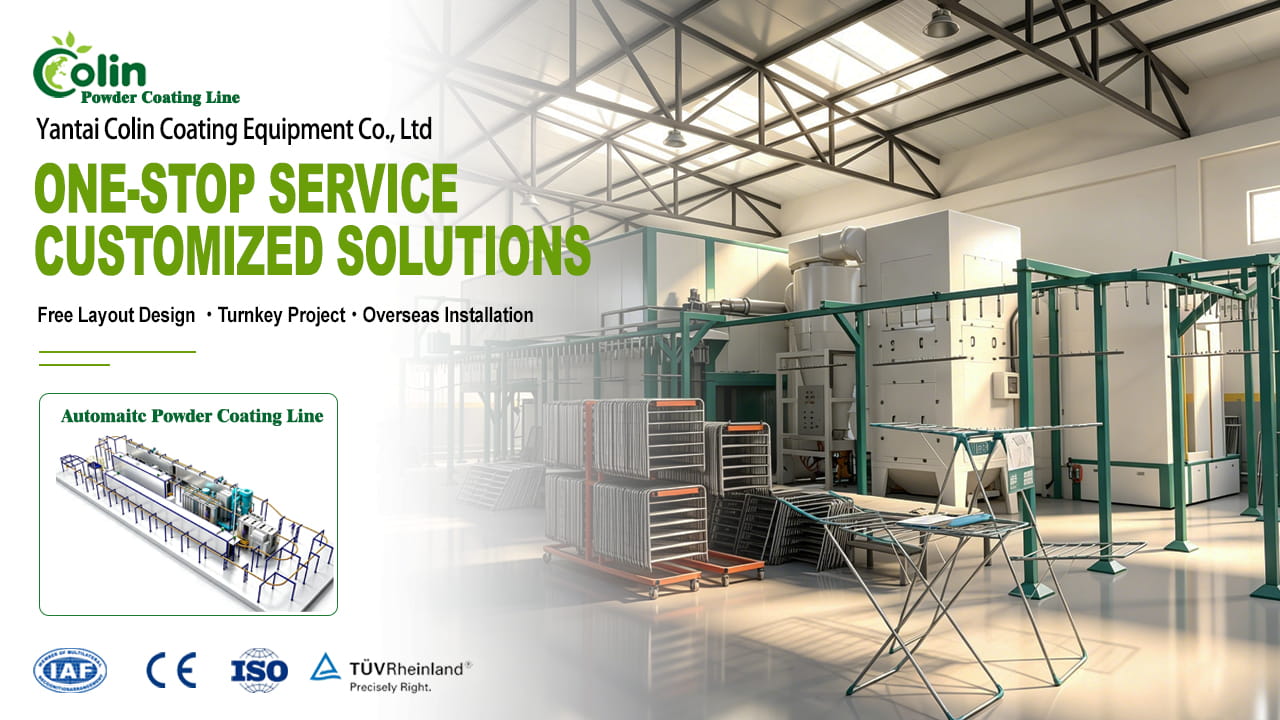
An automatic powder coating line performs best when every process stage is designed around the workpiece, required output, coating specification, and factory conditions. Pretreatment, powder application, recovery, curing, conveying, and control cannot be treated as isolated machines. Their timing and capacity must work together to deliver stable film quality, efficient material flow, and reliable daily production.
For a customized project, Colin can match the coating process to the available factory space, workpiece characteristics, and production targets. This system-level approach helps the line operate as one coordinated finishing process.
The parts being coated determine the basic scale of the system. Maximum and minimum dimensions affect the spray booth opening, oven chamber, conveyor turning radius, and spacing between hangers, while weight influences rail strength, drive capacity, and supporting structures.
Shape complexity also matters. Flat panels may be covered efficiently by reciprocating spray guns, whereas parts with cavities, corners, or changing profiles may require a different gun arrangement or manual touch-up. Drawings, photographs, material details, weight, and hanging orientation provide the foundation for accurate line engineering.
Daily production targets affect conveyor speed, booth configuration, oven length, loading arrangements, and the number of spray guns. A manual line may suit flexible low-volume work, while a semi-automatic system can combine mechanized transport or spraying with manual control where product variety is high.
An automatic powder coating line is generally considered when repeatability, continuous flow, and lower dependence on manual spraying are priorities. The correct choice is not simply the highest automation level; it is the level that supports the expected product mix without creating unnecessary capital or maintenance requirements.
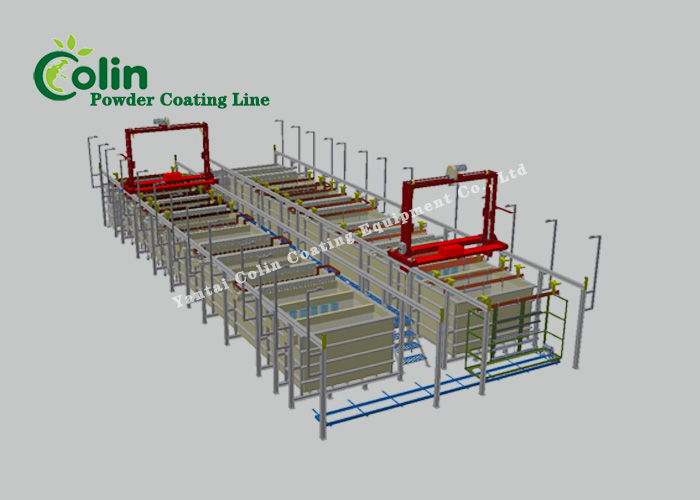
Pretreatment can include degreasing, rinsing, surface conditioning, phosphating or passivation, pure-water rinsing, and drying. The required stages depend on the substrate, contamination, corrosion target, and finish specification.
Spray pretreatment is often considered for accessible shapes, while immersion can contact deep cavities and complex internal surfaces. Sandblasting may be selected when physical cleaning and surface roughness are required. Each route changes equipment length, tanks, pumps, heating demand, water treatment, ventilation, and site utilities.
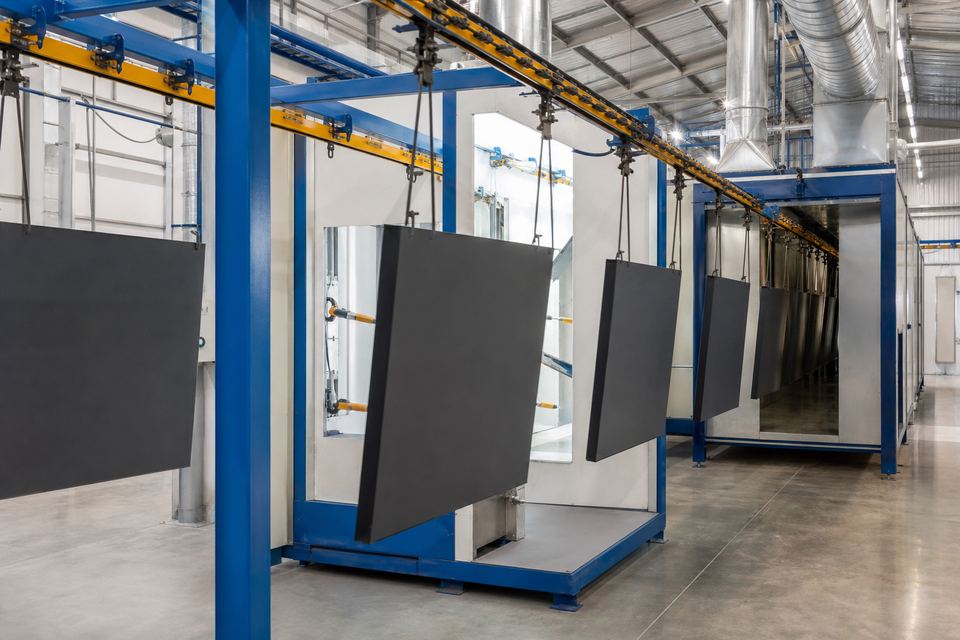
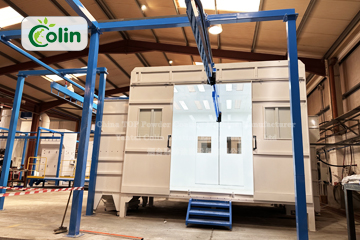
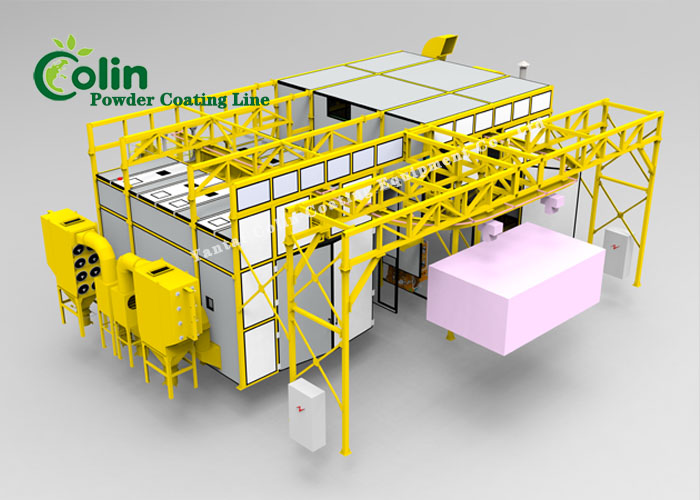
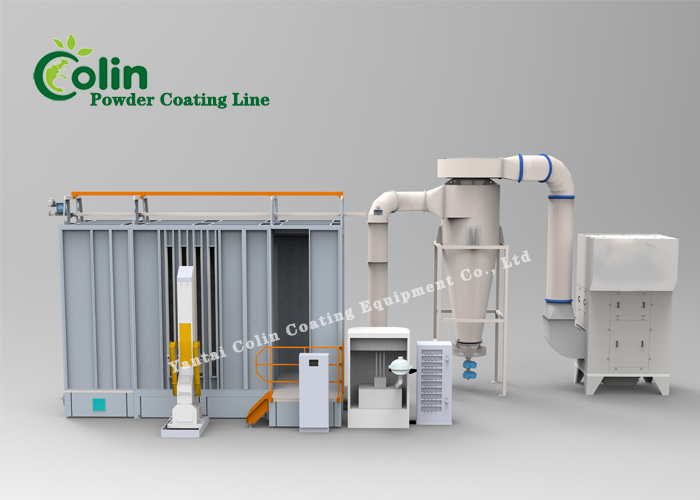
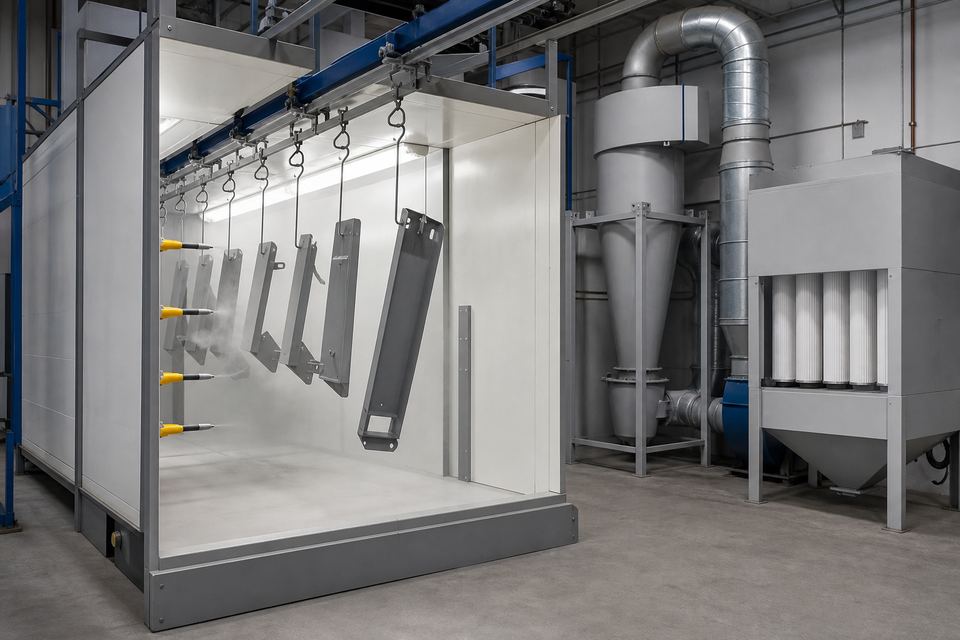
A complete automatic powder coating line can combine manual guns, reciprocating machines, or robotic spraying with a booth and powder recovery system. Booth material, gun quantity, powder supply equipment, filtration stages, exhaust arrangement, and color-change design all influence application stability.
A big cyclone combined with a secondary filter can achieve a powder recovery rate of at least 98 percent. This performance is tied to that recovery configuration and should not be treated as a universal result for every manual, semi-automatic, or customized booth.
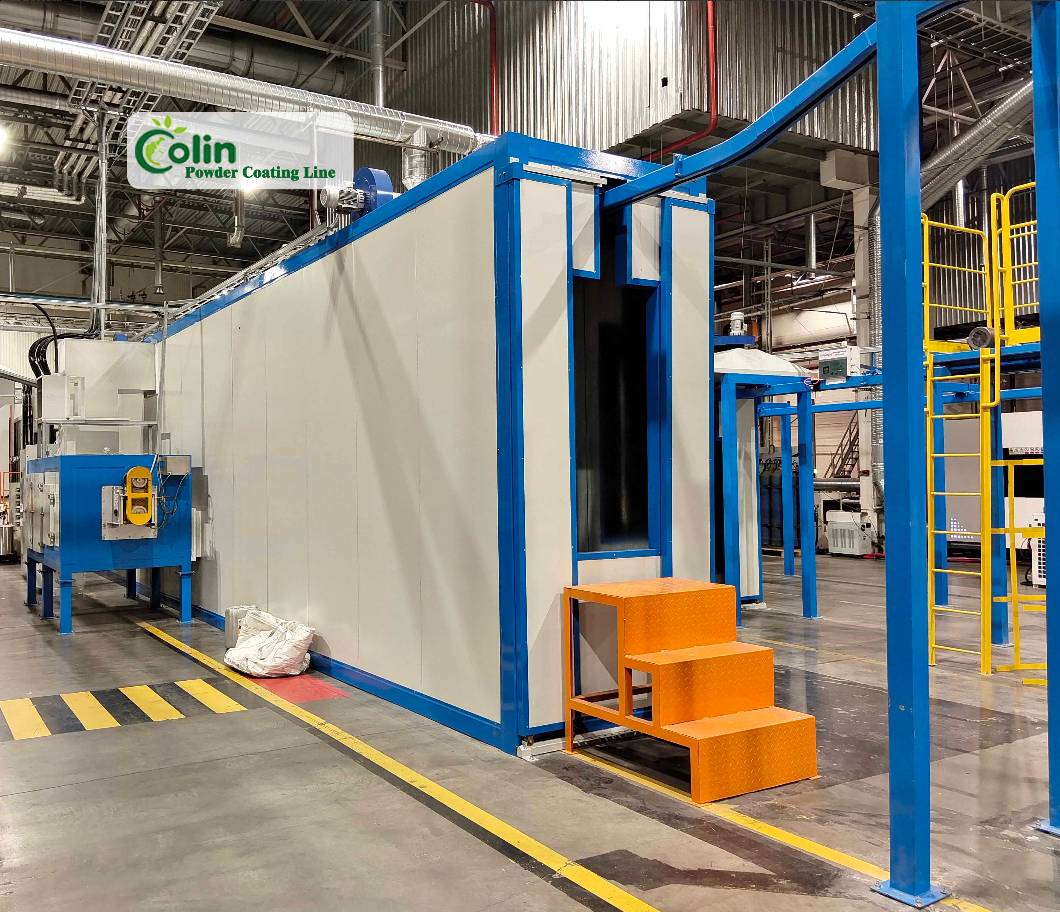
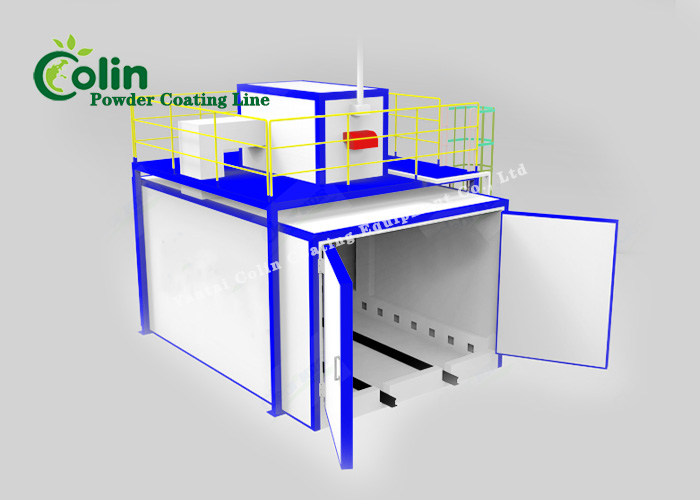
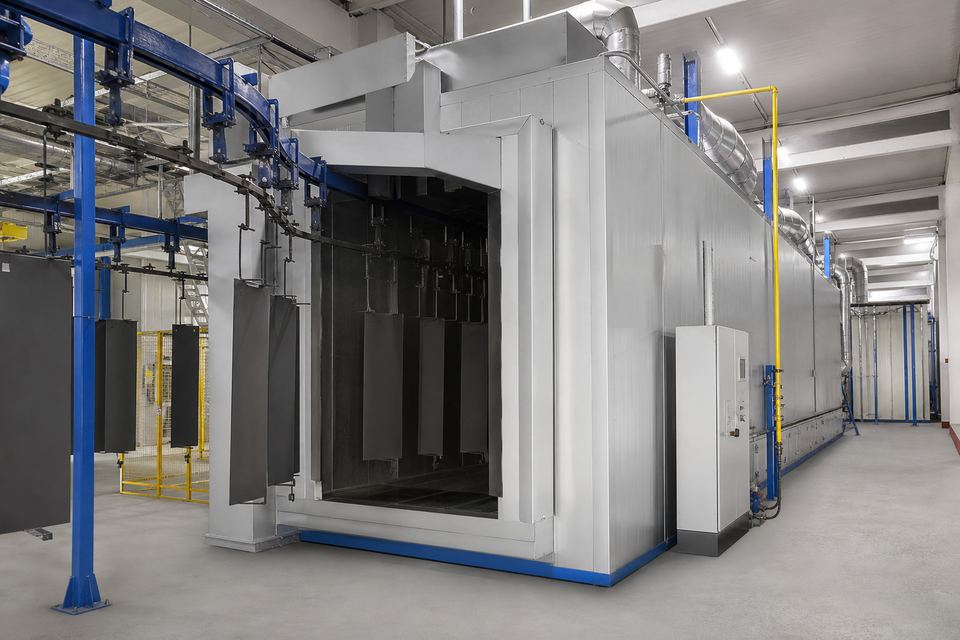
The curing oven is sized around part dimensions, conveyor loading, coating schedule, and required dwell time. Available heating options include natural gas, LPG, diesel, and electricity, allowing the design to reflect local supply and operating conditions.
The automatic line supports a curing range of 160°C to 220°C with temperature accuracy of ±3°C. The working setpoint must still follow the selected powder specification and the actual metal temperature. Insulation, airflow, burner or heater control, access, and maintenance provisions are equally important to stable curing.
Conveying options can include manual movement, automatic overhead transport, ground rails, or other layouts adapted to the workpiece. An adjustable speed range of 0.5–4 m/min supports different process rhythms, while the final operating speed depends on pretreatment time, spraying capacity, oven dwell time, and cooling requirements.
A PLC-based system can coordinate conveyor movement, oven conditions, alarms, and spraying functions. Devices, sensors, interfaces, recipes, and electrical components should be selected around the required process visibility and degree of automation.
Factory foundations, external water, electricity and gas connections, exhaust routes, drainage, and lifting access all affect installation and operation. Treating these interfaces as part of the engineering process prevents the coating equipment from being limited by the surrounding building.
Stable electrical power, clean and dry compressed air, suitable ventilation, and adequate maintenance access should be confirmed before equipment installation. Interface drawings help civil work and utility preparation stay aligned with the final layout.
Production lead time and site installation time are separate. Equipment production usually takes 30–45 working days depending on complexity, while installation and commissioning typically require 4–8 weeks. Shipping, customs clearance, site readiness, and project scope can affect the overall schedule.
Installation planning should define unloading, assembly, wiring, utility connections, no-load testing, loaded testing, operator training, and final process verification. Clear coordination allows temperature, conveyor speed, powder output, and coating quality to be adjusted under actual production conditions.
Filter cartridges, nozzles, chains, seals, sensors, and other wear components should be identified before commissioning so routine replacements do not cause avoidable delays. Maintenance intervals and fault-response procedures are most useful when they are incorporated into operator training.
Support should be evaluated as an operating requirement rather than a sales promise. Useful evidence includes maintenance manuals, troubleshooting procedures, remote diagnostic capability, parts availability, and a clear escalation path for faults.
Line engineering should begin with the factory layout. Workshop dimensions, columns, doors, ceiling height, utility points, loading routes, and maintenance clearances define the available process path. A 2D or 3D layout can reveal conveyor conflicts, heat-sensitive areas, difficult service access, and inefficient part movement before manufacturing begins.
Pretreatment, drying, spraying, recovery, curing, conveying, controls, and ventilation must be balanced as one process. If one stage runs slower than the others, it can create queues, uneven dwell time, temperature variation, or unnecessary stops across the entire line.
Color change requires the same process discipline. A fast-clean color-center configuration can complete a change in 15–20 minutes. Actual performance depends on the starting and finishing colors, cleaning procedure, staffing, acceptable contamination level, booth design, and powder-center configuration.
Reliable engineering data includes the workpiece material, size range, maximum weight, shape, hanging method, desired output, coating requirements, number of colors, change frequency, available floor space, local voltage, compressed-air conditions, and available heating energy. Complete inputs help the engineering team develop a practical process instead of adapting the factory around an unsuitable layout.
A well-designed automatic powder coating line brings pretreatment, spraying, recovery, curing, conveying, controls, and factory utilities into one coordinated process. When each stage matches the workpiece and production rhythm, the line becomes easier to operate, maintain, and adapt as finishing requirements evolve.
Contact us to explore how Colin can connect workpiece requirements, production targets, and factory layout in one coordinated powder coating solution.
A: Engineering starts with the workpiece material, dimensions, weight, geometry, hanging method, expected output, coating requirements, color schedule, workshop layout, and available utilities. Photographs and drawings improve equipment sizing, conveyor planning, booth access, and oven design, especially when parts include cavities or irregular profiles.
A: Pretreatment removes oil, rust, dust, and other contamination before powder application. Processes such as degreasing, rinsing, phosphating, or passivation create a cleaner and more suitable substrate for coating adhesion. The correct sequence depends on the metal, surface condition, corrosion target, and required finish.
A: Available options include natural gas, LPG, diesel, and electricity. The appropriate choice depends on local energy availability, factory regulations, heating capacity, and maintenance resources. Oven engineering should also consider the powder specification, workpiece mass, conveyor loading, airflow, insulation, and required curing time.
A: Manual systems can suit flexible low-volume work, while semi-automatic lines balance mechanized stages with operator control. An automatic line is more appropriate when continuous flow, repeatability, and coordinated process control are priorities. The decision should follow the product mix, output target, labor plan, available space, and process complexity.