Nullam dignissim, ante scelerisque the is euismod fermentum odio sem semper the is erat, a feugiat leo urna eget eros. Duis Aenean a imperdiet risus.
Nullam dignissim, ante scelerisque the is euismod fermentum odio sem semper the is erat, a feugiat leo urna eget eros. Duis Aenean a imperdiet risus.
 Eren
Lowering the setpoint on a powder coating oven looks easy enough when you are sitting at a PC controlling a production line. Yet the melting, flowing and cross-linking of the powder has to be brought about on the part itself. Bracket and thin panel are running on the same conveyor. So a low–temperature system for powder coating has to start with the workpiece and the powder and then work backwards from there to heating, airflow, dwell time and line speed.
Distinguishing between the oven and the curing process is of value to factories seeking to reduce their energy usage or to apply coatings that are not suitable for high temperature. From Colin’s complete finishing solutions,the curing process is considered as part of a complete finishing process and therefore the oven is considered in conjunction with the pretreatment, spray recovery and material handling facilities.

Conventional curing is often acceptable for steel products but not for thin sheets, aluminum profiles, appliances and other parts and assemblies that contain sensitive components. Excessive heat can cause parts to distort, prolong cooling time and restrict the range of products that can be processed on the line.
There are low-temperature powders too. The tool however needs to be able to deliver the required part-metal temperature. Air temperature as displayed on the control screen does not say it all. Part mass, wall thickness, loading density and processing time in the heated area all influence the result.

The low setting will not necessarily equate to low energy costs as the heat can escape through doors, gaps, exhaust, and poor air management. Operating an oversized oven with small loads is another way of wasting energy.
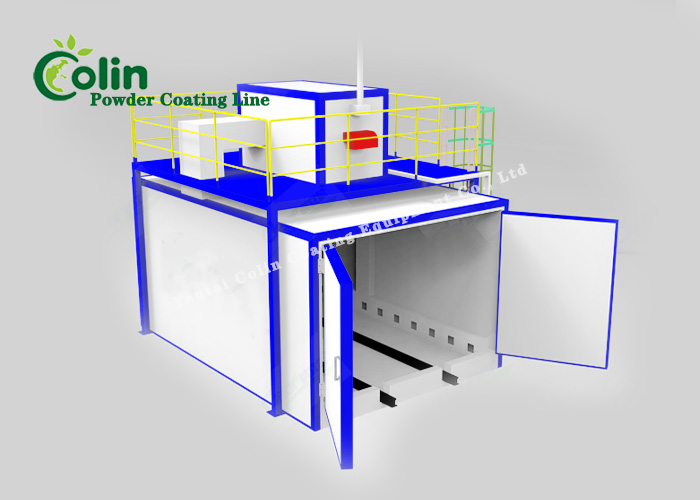
Colin designs powder coating ovens using a combination of gas, electric, infrared, and a mix of the above methods for heating. Each works differently in production depending on the part dimensions and weight, production pace, and availability of utilities in the workshop.

Uneven airflow often appears as a coating problem rather than an oven problem. One area looks acceptable, while a recessed section or a heavier joint remains under-cured. Simply raising the temperature can hide the cause and overheat the easier sections.
The air path should fit the way the parts are hung. Spacing matters too. Packed racks can block circulation, and irregular gaps can produce different heating conditions from one load to the next.
For more complex parts, convection is a common method to cool all faces and recesses. Infrared heat transfer is fast to energy transfer and suitable for thin, open and even shaped articles. However, it has limited capability to penetrate into shadowed surfaces.
Infrared can be combined with circulating air for very quick response and wide spread of heat. Colin’s engineers assess specific factory geometry to recommend the best form of heating or combination of methods.
Typically production personnel look to drive more parts through the conveyor. Increasing the speed of the parts on the conveyor however reduces the time available for parts to be subjected to heat and to cure. The effect is more pronounced as parts transit from lightweight components to larger and heavier frames.
Oven length, heat input, loading pattern, and conveyor speed must all be designed within the same calculation. Designing these factors individually may ensure that the line can run at the designed throughput, but it will not deliver consistent results.
Profiles may look simple, but their sections and thermal mass vary. Long parts also need stable conditions from one end of the oven to the other. The curing setup should provide enough heat for the complete profile without exposing thin areas to more energy than they need.
Sheet-metal housings heat quickly. Assemblies that include plastic sections or other sensitive materials need closer control of the process window. A lower-temperature powder can help, provided its cure schedule and the oven’s real performance agree.
Heavy weldments are the opposite case. Their surface may feel hot while the thicker joints are still catching up. A short cycle is risky here, so the design needs to account for the slowest-heating area of the workpiece.
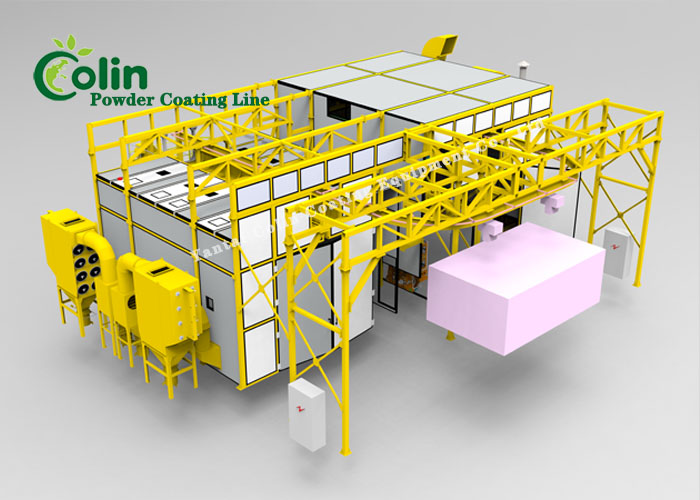
Colin connects this workpiece analysis with the automatic powder coating line layout, so pretreatment, booth access, hanging points, conveyor movement, and curing work as one process. Pretreatment, booth access, hanging points, conveyor movement, and curing are planned as one flow rather than a group of unrelated machines.
The following questions have to be answered to start: What is the part made of? How big and heavy is it? How many parts are produced per hour? Which powder is used? How much space on the floor is available? What kind of energy is already available in the building?
Batch ovens, tunnel ovens, horizontal ovens, vertical ovens, and specialty ovens are all served from this point. Ground-rail trolleys, overhead chains and mesh-belt conveers are used to move products of different sizes through the oven. Recipes, temperatures, alarms and more are all easily managed by the operator using the oven’s PLC and 7″ touch screen.
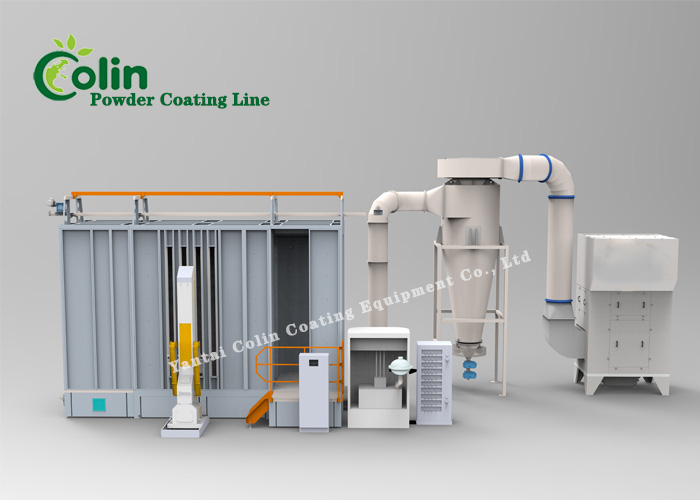
Colin’s pretreatment systems can be integrated into one booth to cover cleaning, rinsing, surface conditioning, conversion treatment, drying and process control. The power coating booth must then contain overspray and provide for part recovery and color change prior to the parts entering the oven.
Note the minimum and maximum size parts, weight, material, wall thickness, and the direction of hang. Include the necessary hourly production rate, powder curing process, gas or electrical power capacity, preference of conveyor type, sizes of the workshop, and any maintenance clearance required.
This brief exercise will avoid the common pitfall of selecting the standard oven first and then attempting to adjust the product into it. An effective powder coating oven needs to be customized to production reality rather than simply selected from the catalog specifications. Colin can use the operation information for designing the curing process.
A: It cures compatible powder systems at a lower thermal range while controlling airflow, part temperature, and dwell time.
A: Yes, when the powder schedule, profile thickness, hanging method, and oven conditions are compatible.
A: No. Infrared heats quickly; convection often handles complex shapes more evenly. Some lines benefit from both.
A: Faster travel reduces heating time, so speed must match oven length, heat input, and part mass.
A: Colin needs the part material, dimensions, weight, powder schedule, target output, utilities, and available workshop space.