Nullam dignissim, ante scelerisque the is euismod fermentum odio sem semper the is erat, a feugiat leo urna eget eros. Duis Aenean a imperdiet risus.
Nullam dignissim, ante scelerisque the is euismod fermentum odio sem semper the is erat, a feugiat leo urna eget eros. Duis Aenean a imperdiet risus.
 Eren
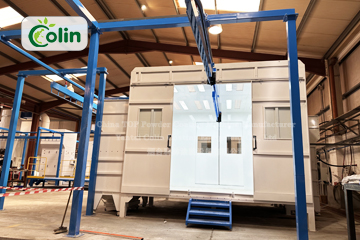
The sandblasting booth enhances the surface treatment process by enclosing abrasive blasting within a designated space where dust removal, abrasive recycling, material handling, and operator sightlines can all be coordinated. This is important when working with large pieces of metal because rust, oxide scale, welding debris, and the existing coating have to be cleaned away before the next finishing process can function effectively. Colin‘s approach to sandblasting booths incorporates the dimensions, weight, and configuration of the material to make blasting a reliable processing step. The wider Colin industrial coating equipment range can support the finishing stages that follow.
The strongest setup is not defined only by room size. It depends on how the abrasive is delivered, how it is recovered, how dust is collected, and how heavy components enter and leave the booth. A closed sandblasting booth also helps create a cleaner path toward powder coating, painting, or other protective finishing processes.
Large steel structures create surface-preparation problems that small parts rarely expose. Long weld seams, deep corners, heavy plates, and structural sections can trap rust and oxide scale in areas that are hard to reach with casual manual cleaning. When surface preparation is uneven, the later coating may look acceptable at first but remain vulnerable at edges, joints, and sheltered recesses.
A sandblasting booth gives the blasting process a defined workspace. The operator can work inside a room designed for abrasive impact, dust extraction, lighting, workpiece access, and abrasive circulation. For steel structure, shipbuilding, wind energy, and engineering machinery applications, this controlled environment is especially useful because the parts are often too large, heavy, or complex for compact blasting cabinets.
Outdoor blasting may look flexible, but it often creates inconsistent results because weather, wind direction, dust spread, and abrasive cleanup affect the job. A closed booth keeps the process inside a controlled space, which makes it easier to maintain visibility, recover abrasive, and reduce dust escaping into the wider workshop. It also helps the team separate true surface defects from problems caused by poor cleanup or uneven blasting access.
For coating preparation, consistency is the real value. The surface must be clean enough for the next process, and the workpiece should move forward without bringing loose dust or spent abrasive into the spray area. Colin sandblasting booth planning can also be connected to a Colin powder coating line when blasting is part of a complete finishing route.

Abrasive recovery is one of the biggest differences between a basic blasting area and an industrial sandblasting booth. Colin describes standard scraper plus bucket lift recovery or a honeycomb floor recovery system, both intended to return abrasive to the circulation path instead of leaving it scattered across the floor. That changes blasting from a messy stop-start task into a more organized production process.
The right recovery layout depends on the booth size, workpiece footprint, movement path, and daily blasting volume. Oversized steel parts may need carts, electric hoists, or suspended conveyor chains, so recovery equipment has to leave enough room for safe loading and unloading. If the floor design blocks workpiece handling, the recovery system can become a bottleneck even when it performs well mechanically.
Recovered abrasive is only useful when dust, debris, and broken particles are separated effectively. Colin’s sandblasting booth integrates multi-stage cyclone separation, which helps remove dust and debris from the abrasive stream. Its abrasive recovery rate is over 98%, a useful figure for discussing circulation without turning the article into a simple specification sheet.
Cleaner circulating abrasive helps the operator maintain more stable blasting force and surface action. It also reduces unnecessary abrasive waste and keeps the booth easier to manage between jobs. For heavy workpieces, this matters because a single part may occupy the room for a long time, and interruptions for cleanup or abrasive replacement can disrupt the whole surface-preparation schedule.

Dust control is not only a housekeeping concern. In blasting work, airborne dust reduces visibility, hides untreated areas, and can spread contamination into nearby production zones. Colin’s sandblasting booth uses a filter cartridge dust collector with pulse back blowing technology, supporting continuous dust capture and filter cleaning during operation.
Dust emission concentration can be controlled within 5 mg/m3. That figure should be treated as a design capability to discuss with the actual room layout, abrasive type, workpiece condition, and maintenance routine. In daily operation, filter condition, airflow balance, and cleaning discipline still decide whether the booth remains clear enough for accurate surface work.
A sandblasting booth also needs visibility and containment. Colin includes an explosion-proof lighting system and a micro negative pressure design, both of which support safer operation and reduce dust overflow. Good lighting lets the operator see weld edges, corners, and previously coated areas before the part leaves the booth.
Micro negative pressure helps keep dust moving toward the collection path instead of drifting through doors or gaps. The value becomes clear when blasting large parts that require longer working time and repeated repositioning. A clean line of sight reduces missed spots, while containment keeps the surrounding finishing area more predictable.
A useful sandblasting booth begins with the workpiece, not a fixed room label. Colin can customize room size according to the workpiece dimensions and configure handling with electric hoists, suspended conveyor chains, or carts. The equipment can support manual, semi-automatic, and fully automatic robot operation modes, giving different factories room to match labor, part geometry, and production rhythm.
This flexibility is important for complex steel components. A small bracket may need direct manual attention, while a large structural frame may require planned movement, staging, and safer access around the part. The booth should make these operations easier, not force every workpiece into one handling pattern.
Colin positions the sandblasting booth for the steel structure, shipbuilding, wind energy, and engineering machinery industries. These sectors often share similar surface-preparation challenges: heavy workpieces, abrasive-resistant room surfaces, dust load, and the need to prepare metal before protective coating. The booth body can use a modular steel structure with a 12 mm thick manganese steel wear-resistant plate or special ceramic protection on the inner wall.
These considerations lead to a common functional objective, where the room must withstand prolonged abrasive effects and still remain functional. Maintenance doors, observation windows, PLC control system, air pressure monitoring system, abrasive level alarm, and emergency stop functions make the process of managing the booth more production-oriented rather than a tough working environment.
Value is created by the sandblasting booth because it allows total control of the entire surface preparation process. The total control of the environment ensures consistency in removing the rust and oxide from the large steel parts before applying the protective powder coat. Colin brings the booth, recovery route, dust collection, and handling method into one solution, making surface preparation easier to repeat on real industrial workpieces.
Contact Colin to connect large-part surface preparation with a cleaner, more controlled blasting process.
A: The sandblasting booth is a device employed in removing rust, oxide scale, previous coating, and any contaminants on metal workpieces in a contained room. The sandblasting booth is highly suited for handling large workpieces because all processes like abrasive blasting, dust extraction, illumination, and handling of the workpieces can be achieved in a single process.
A: Abrasive recovery reduces waste, shortens cleanup time, and keeps blasting work more organized. Colin’s sandblasting booth can use a scraper plus bucket lift or honeycomb floor recovery, with multi-stage separation to remove dust and debris. Cleaner abrasive circulation supports more stable blasting and a better working environment.
A: Dust control improves visibility, keeps the surrounding workshop cleaner, and helps operators see untreated areas before the workpiece leaves the room. Filter cartridge dust collection, pulse back blowing, and micro negative pressure can reduce dust spread. The final result still depends on maintenance, airflow balance, and the actual blasting conditions.
A: Yes. Colin is able to modify the dimensions of the booth to suit the piece of material, and the handling process can be performed using electric hoists, chain-suspended conveyor systems, or trolleys. Booth operations can be done using manual, semi-automatic, and automatic robots, which are appropriate for large steel structures, shipbuilding components, wind energy parts, and engineering machines.