Nullam dignissim, ante scelerisque the is euismod fermentum odio sem semper the is erat, a feugiat leo urna eget eros. Duis Aenean a imperdiet risus.
Nullam dignissim, ante scelerisque the is euismod fermentum odio sem semper the is erat, a feugiat leo urna eget eros. Duis Aenean a imperdiet risus.
 author
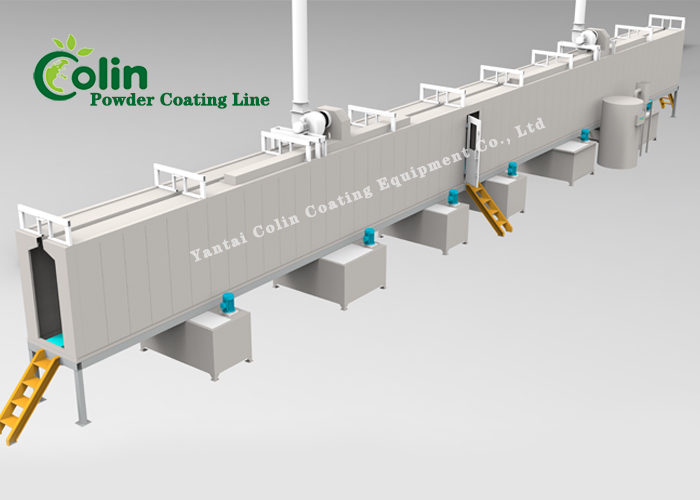
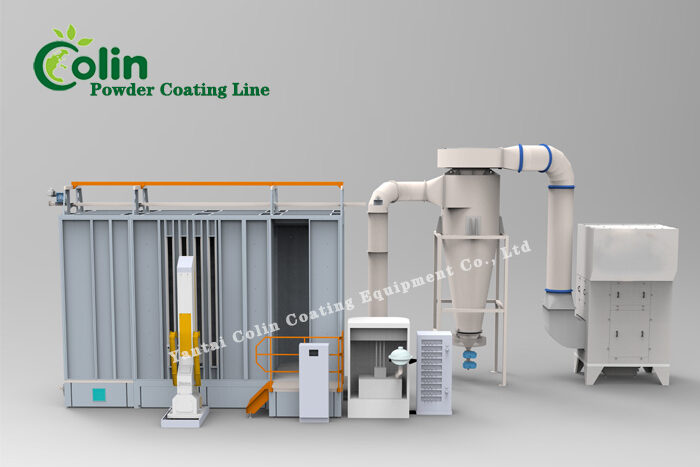
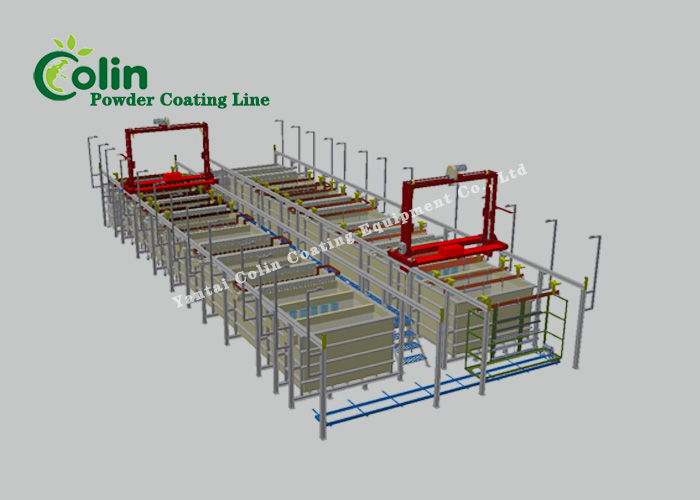
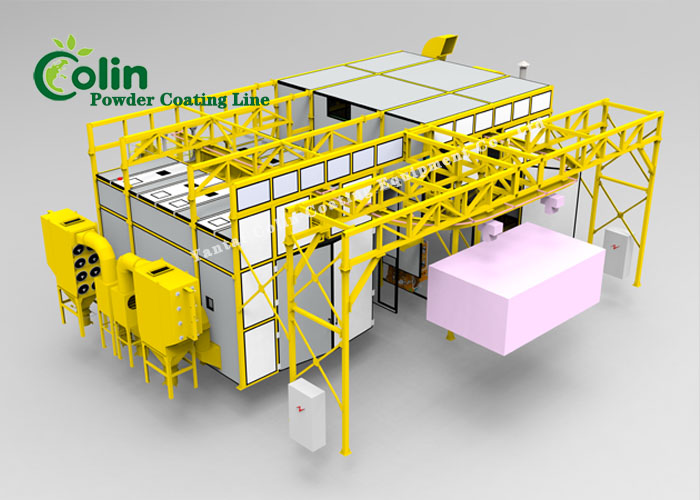
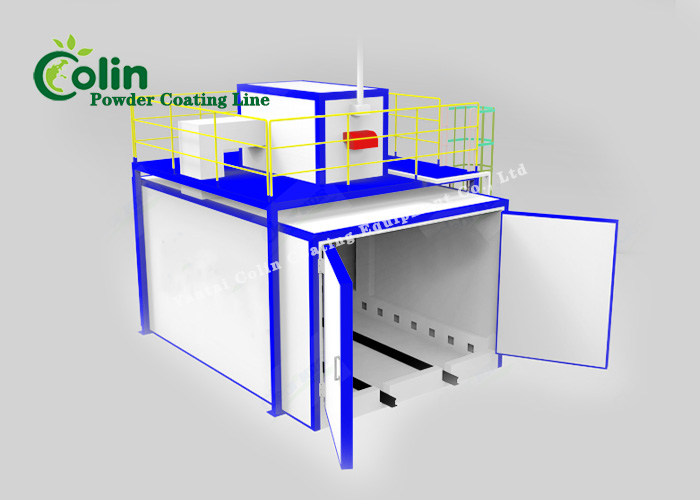
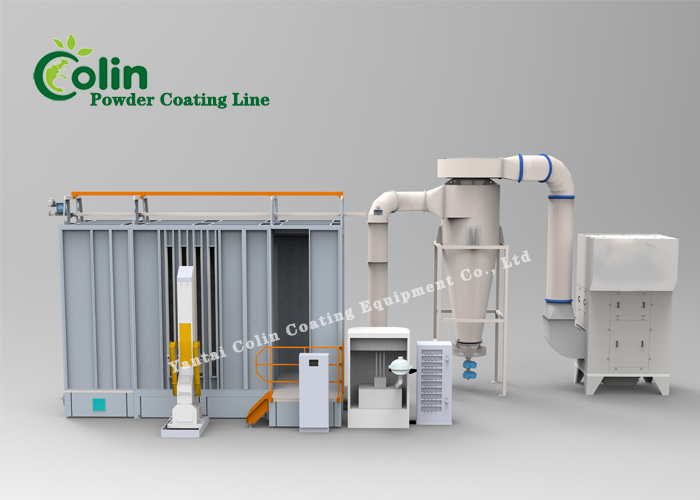
The performance of a powder coating is largely dependent on the quality of the metal surface it is applied to. Contamination with oil, dust, oxides, scale, salt etc., as well as handling contamination, can prevent adequate adhesion of the coating and allow corrosion to start under the coating film. A suitable pretreatment system will provide a surface suitable for coating by way of cleaning, rinsing, chemical conversion and drying of the surface followed by controlled transfer to the spray and curing areas. Colin designs and manufactures complete powder coating lines, pretreatment systems, spray booths and curing ovens as well as blasting rooms and other related equipment for surface finishing.
Powder coating is a complete system from the substrate to pretreatment, spraying of the powder, curing, handling, and inspection. Residues of oil from forming, rust from storage, dust from blasting, as well as old residues from previous processes on the substrate have to be removed or converted before applying the powder coating. This is done by pretreatment.
The appropriate process will depend upon the particular substrate or product being produced. This may include steel, galvanized steel, aluminum and mixed metal assemblies, which will require different cleaning and rinsing together with different activation and conversion processes. The coating-line supplier should start with the part to be coated and the required finish and work from there, not from a ‘standard’ tank sequence used in another factory.

Start by identifying how the parts are made and handled. Stamping oils, drawing compounds, welding residue, laser-cut scale, rust, fingerprints, dust, and old coatings each create different preparation problems. Record the material, surface condition, part size, weight, geometry, production rate, storage time, and whether parts arrive dry, oily, or already pre-cleaned.
Geometry matters as well since blind holes, overlaps, seams, recesses, and even internal channels can get clogged with liquids and chemistry. The part’s hanging orientation, the spray’s direction of travel, location of drain points, and the part’s processing speed all need to be designed to allow the part to drain and dry out. A pretreatment process may clean the outside of a part but leave behind residues on the inside, which can cause a field failure.
Cleaning of contaminants such as oil, grease, mud, etc. is followed by a rinse stage to prevent the return of the cleaning solution to previous stages. Methods of cleaning and rinsing include spray or immersion washes, heated stages, multiple rinses, filtration, addition of cleaning chemicals, and controlled overflow or water management.
The process must define temperature, concentration, pressure, contact time, water quality, replenishment, and drainage. Clear indicators for bath or filter need to be defined for the operator. Recordable controls for the process enable analysis of adhesion problems and distinguish between powder, oven, and pretreatment processes.

A conversion coating can then be used to improve the bond between the metal and the coating, creating a suitable surface for the powder to adhere to and also to slow corrosion at any damaged or exposed areas. The chosen coating will depend on a number of factors, including the substrate, the environmental target, customer requirements, wastewater disposal, and compliance with local regulations.
Do not judge conversion quality by appearance alone. Use process records and coating tests such as cross-hatch adhesion, impact, humidity, salt spray, or other project-defined methods. The exact test and duration should be agreed with the coating and end-use requirements; a single generic test cannot represent every application.
Excess water or other chemicals on a part can cause problems when it is put through the spray booth or curing oven. In order to dry a part, all surfaces, visible and hidden, must be dried without overheating the part or damaging a sensitive conversion coating. Part setup, airflow, temperature, and time all affect successful drying of parts.
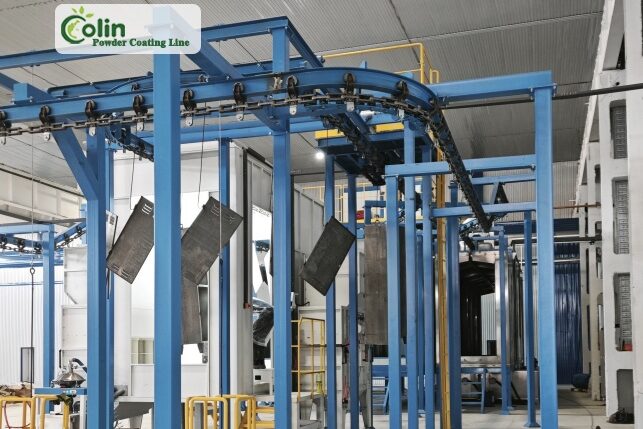
It is also important to keep the transfer from pretreatment to powder application short and as free from contamination as possible. The coating line also includes process equipment such as pretreatment equipment, spray booths, curing ovens, and conveying units. It is advisable to map out the entire material flow in order to prevent clean parts leaving the pretreatment to be contaminated by dust or oil in subsequent processing stages before being coated.
The batch process is suitable for mixed parts of low to medium volume and for frequent changes of products. The continuous spray or tunnel coating line is suitable for high and constant throughput of part families with repeatable loading. Here, conveyor speed, tank length, spray area, consumption of chemicals and of the drying process, as well as access for the operator, have to be calculated from the real production mix.
Parts such as large or complex items would typically require a different setup than small brackets. Consider factors such as nozzle access, shadow areas, hanging points, drain time, load weight, and inspection of all surfaces. A line that is quick on simple flat parts will not necessarily provide the same standard of preparation on deep framed parts or components that have been assembled.
Pretreatment quality cannot compensate for an incorrect powder film or curing profile. The complete line should coordinate film thickness, spray settings, oven temperature, part temperature, conveyor speed, airflow, and cooling. If a defect appears, the quality team should be able to trace the part through each stage rather than guessing.
The coating booth, recovery, oven, and conveyor can all affect the return on investment of a pretreatment process. Excessive rework, color contamination, poor hanging, or uneven cure can all negate the benefits of a good surface finish. Treat the complete process line as a single process with shared Acceptance Tests and Process Settings.
The control of pretreatment processes such as bath concentration, pH, temperature, conductivity, spray pressure, flow, water quality, filter condition, drying temperature and coating adhesion can be controlled by outlining who measures each variable, how often it is measured, where the results are recorded and what action needs to be taken if the results are out of control.
The maintenance of pumps, nozzles, tanks, heaters, filters, conveyors, chemical dosing plant, exhausts, drains and other wastewater plant equipment should be covered by Colin’s engineering and service capability.
You might like to ask the supplier to go through a list of points relating to the representative parts, any potential contaminants, the throughput, mix of substrates, dimensions of the building, utilities, the chemical plan, wastewater from the plant and potential for future expansion. This could also include a detailed process flow diagram, the proposed layout of the equipment, details of the tanks and nozzles, the proposed drying arrangement, control points, safety issues and the proposed acceptance tests.
A strong supplier can describe trade-offs rather than promise a single solution. Colin provides powder coating lines, pretreatment systems, spray booths, curing ovens, sandblasting and shot-blasting rooms, and electrophoretic coating lines. The buyer should require a project-specific design and a sample or pilot validation for difficult surface conditions.
Pretreatment is used to improve powder coating adhesion and corrosion protection by providing a clean, stable, and properly conditioned surface for coating. Select the appropriate process based on substrate, contaminants, geometry, throughput, chemistry, drying, testing, and complete line layout.
Contact Colin to discuss your parts, pretreatment requirements, and acceptance criteria, and request a tailored quotation for an integrated coating line.
A: Something may seem to adhere well to a clean surface, yet contain oil, oxide, dust, corrosion salts, and other residues. Surface pretreatment creates a controlled surface which promotes performance and repeatability. The process used will depend on many factors, including the substrate, contaminant, part geometry, coating, and end-use environment.
A: Not necessarily. Different metals need to be cleaned and activated, and then go through conversion chemistry, followed by rinsing and drying. Therefore, mixed-metal production is best done in a carefully designed sequence or even in completely separate production routes. The supplier must validate the actual substrates, and then define the required chemistry and control limits for each part family.
A: Use process records and perform relevant coating performance tests. Depending on the application, these could include cross-hatch adhesion, impact, high humidity, salt spray, etc. The tests could be inspected for appearance after a fixed time. It is recommended that the buyer and supplier of the coating agree on the most appropriate method and associated parameters prior to testing.
A: Water or chemical residue can create pinholes, cause blisters, make parts not stick, or get contaminated with residue when parts are sprayed in the spray booth. Drying hidden surfaces and the geometry of the part must be considered. Check airflow, temperature, orientation, conveyor speed, and transfer distance simultaneously to get optimal drying.