Nullam dignissim, ante scelerisque the is euismod fermentum odio sem semper the is erat, a feugiat leo urna eget eros. Duis Aenean a imperdiet risus.
Nullam dignissim, ante scelerisque the is euismod fermentum odio sem semper the is erat, a feugiat leo urna eget eros. Duis Aenean a imperdiet risus.
 author
A powder coating pretreatment system is the stage that makes or breaks the final finish. It removes oil, dust, rust, and other surface contamination, then prepares the part so powder can bond evenly and cure into a stable coating.
Colin’s pretreatment system sits at the front of a complete line for a reason: without reliable surface preparation, good powder and a good oven still cannot rescue the result.
The visible coating often gets the credit, but the real story starts before the booth. Oil from handling, dust from storage, rust on steel, and oxide on aluminum all interrupt adhesion and can leave the finished surface looking uneven or weak.
That is why surface preparation is not a side step in a powder coating line. It is the quality gate that gives the coating a clean, active base, which is how finish quality becomes more predictable from part to part.

The right cleaning system has to match the part, not just the process label. Colin’s approach is built around workpiece material, size, weight, shape complexity, and the coating quality the customer wants to protect, whether the parts are iron, aluminum, or a mixed production flow.
A practical pretreatment sequence starts with degreasing, then moves through rinsing, surface conditioning, and the chemical step that helps the surface accept powder more evenly. Each stage removes a different kind of obstacle, so the finish is not fighting hidden residue later in the line.
Pure-water rinsing and drying matter just as much as the earlier wash stages. If leftover ions or moisture stay on the part, they can undermine the coating after spraying and leave defects that are far more expensive to chase down later.
A stable conversion layer does more than make metal look prepared. It supports adhesion, helps corrosion resistance, and keeps the coating behavior more uniform when the line is running through repeated shifts and repeated batches.
That is the practical answer to how surface preparation improves powder coating adhesion: it gives the powder a surface that is clean, active, and consistent enough to hold the cured film in place.
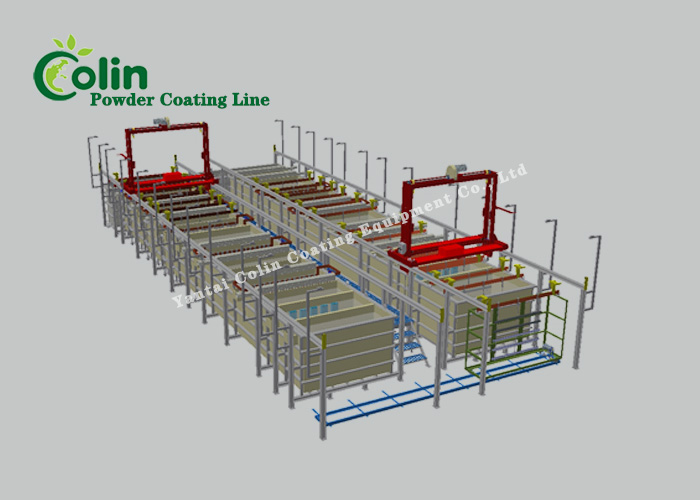
There is no single pretreatment recipe that works for every line. A powder coating pretreatment system can use spray or immersion, and the better choice depends on how the part is shaped, how much contamination it carries, and how quickly the line needs to move.
Spraying is a strong fit for flat panels, frames, and other parts with open geometry. It is efficient, easier to align with a steady conveyor rhythm, and often works well when the cleaning system has to support a fast, straightforward powder coating line.
Immersion becomes more attractive when the part has deep cavities, hidden corners, or complex shapes that spray nozzles may not reach evenly. In those cases, full contact with the treatment solution helps protect finish quality where geometry would otherwise create blind spots.
That is why a custom pretreatment system for a powder coating line is often more useful than a fixed layout. The best choice is the one that lets the part move cleanly through preparation without forcing the operator to compromise on coverage or throughput.
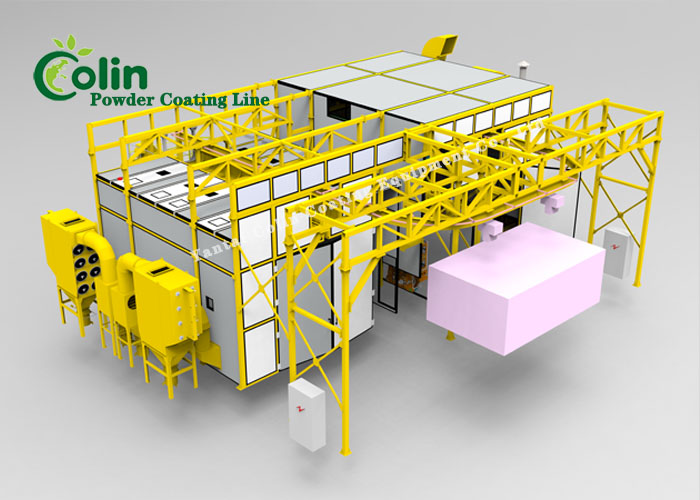
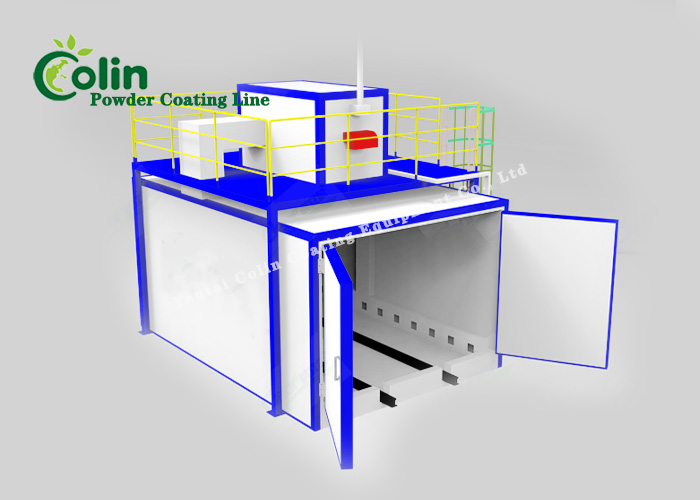
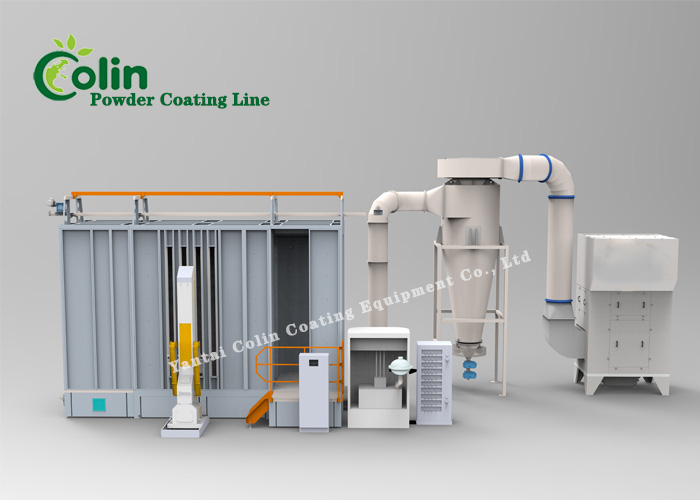
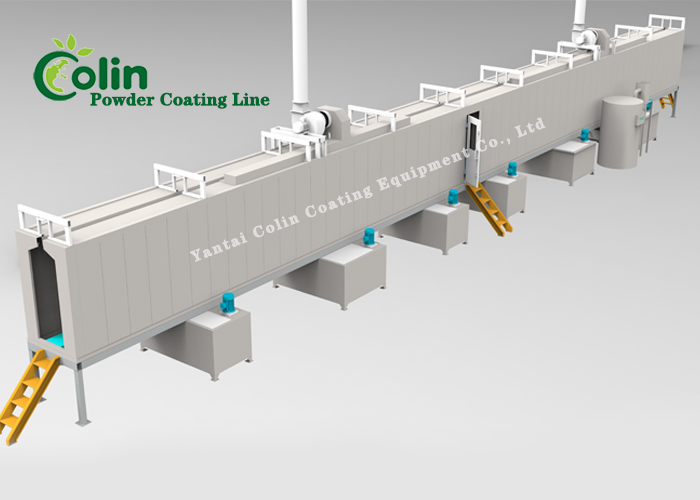
Colin treats pretreatment as the front end of the workflow, not an isolated machine. The powder coating line needs the pretreatment stage, the spray booth, the curing oven, and the conveyor to move together so the line stays stable.
That matters across the applications Colin serves, including aluminum profiles, furniture, transportation parts, hardware tools, and home appliances. Each of those uses asks the pretreatment stage to balance a different mix of surface appearance, durability, and production rhythm.
For aluminum profiles, the visual side of the finish is often front and center. For furniture and hardware, stable adhesion and repeatable cleaning matter just as much, because the line has to keep producing parts that look consistent after curing and handling.

The best way to choose a pretreatment system for industrial coating lines is to start with the part itself. Material, contamination level, part geometry, and the target finish all shape the equipment choice more reliably than a generic catalog description.
If the line handles mostly simple shapes, speed and ease of cleaning may matter most. If it handles mixed batches, deep cavities, or a powder coating system for aluminum profiles, flexibility and coverage usually deserve more attention than raw simplicity.
The strongest setup is the one that protects adhesion without adding unnecessary complexity. That is the balance Colin is built to support: a practical cleaning system that matches the part, the line, and the finish standard the job really needs.
A powder coating pretreatment system is not a background accessory; it is the stage where adhesion and finish quality are decided before the first powder particle lands. When it is matched to the part and the line, it turns cleaning into a controlled part of production instead of a risky variable.
See Colin‘s pretreatment system to see how the front end of the coating workflow is organized in a complete line.
A: Any metal part that carries oil, oxide, dust, or transport residue benefits from pretreatment, but the biggest gains appear on parts where finish quality matters most. Aluminum profiles, furniture frames, hardware tools, and transportation parts all rely on stable surface preparation before powder coating.
A: No. Spray pretreatment works well for simpler shapes and high-throughput lines, but immersion can be a better fit for deep cavities, complex geometries, or parts that need more complete contact. The right answer depends on the part, not just the equipment style.
A: Aluminum profiles often need a clean, uniform look, so surface preparation has to remove contamination without leaving residue behind. A well-matched pretreatment system helps powder bond evenly and supports a more consistent finish across long visible surfaces.
A: Colin treats pretreatment as the front end of the coating workflow, not an isolated machine. That matters because the cleaning system, powder coating booth, curing oven, and conveyor all need to work at the same pace if the line is going to stay stable.