Nullam dignissim, ante scelerisque the is euismod fermentum odio sem semper the is erat, a feugiat leo urna eget eros. Duis Aenean a imperdiet risus.
Nullam dignissim, ante scelerisque the is euismod fermentum odio sem semper the is erat, a feugiat leo urna eget eros. Duis Aenean a imperdiet risus.
 author
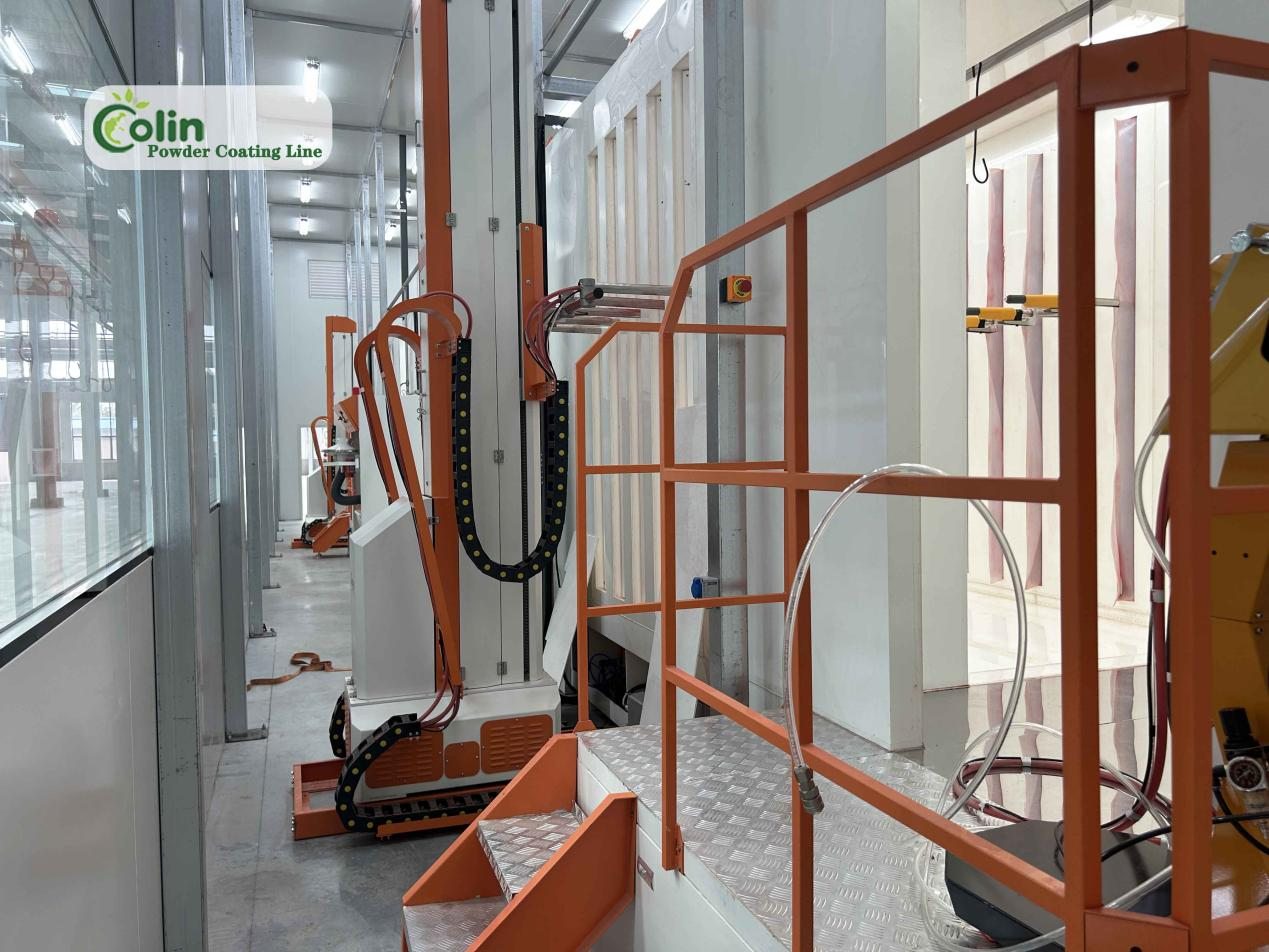
When selecting a powder coating line supplier, it is essential to evaluate their experience in aluminum finishing applications. A qualified supplier such as Colin demonstrates deep technical expertise and long-term industry presence. This level of experience ensures that the supplier understands the specific challenges of aluminum substrates, including heat sensitivity and surface treatment requirements.
Technological capabilities are another decisive factor. Powder coating lines are automated surface coating systems based on the principle of electrostatic adsorption, widely used for surface treatment of metal and non-metal substrates in industrial products. Advanced suppliers integrate automation technologies such as PLC control, robotic spray guns, and intelligent temperature management to ensure precision and repeatability. Energy efficiency is also crucial—modern systems reduce consumption by up to 30% compared with traditional painting methods.
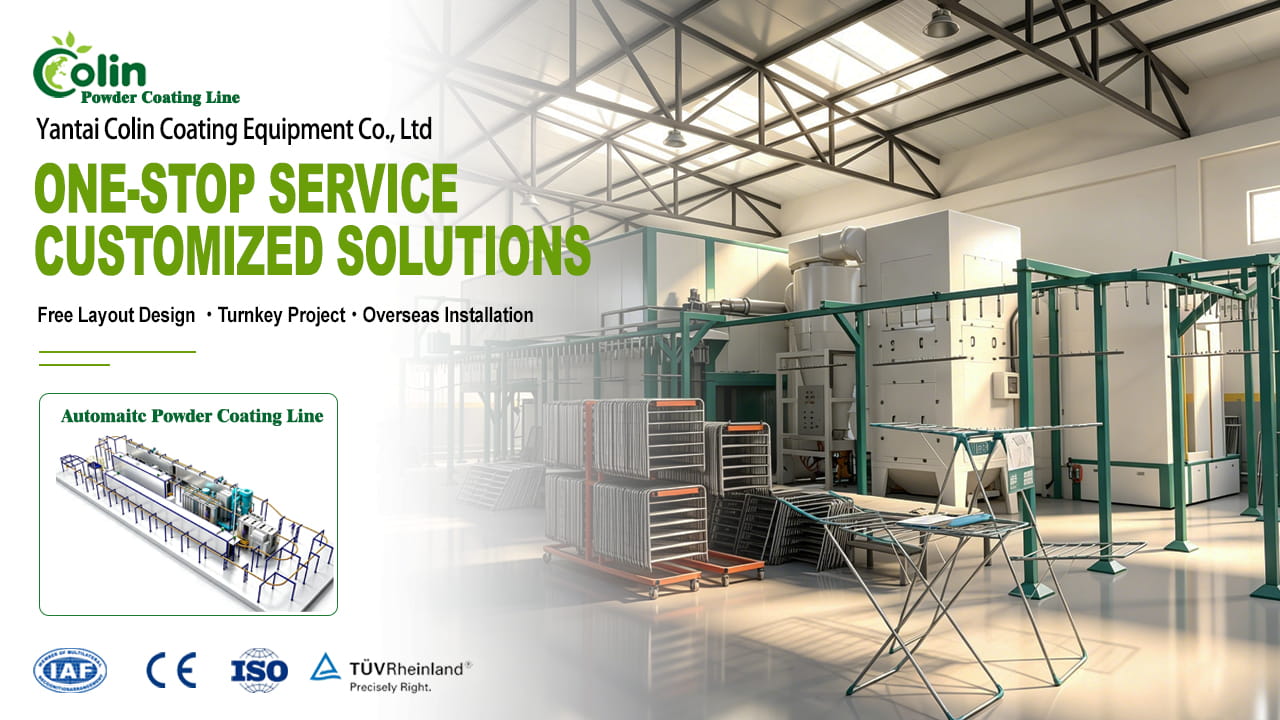
Certifications and quality control systems reflect a supplier’s commitment to international standards. Colin has passed ISO9001 Quality Management System, ISO14001 Environmental Management System, and ISO45001 Occupational Health and Safety Management System certifications, with products complying with CE standards. After-sales support should include rapid response mechanisms, spare parts availability, and lifetime technical support to maintain operational continuity.
Compatibility with aluminum substrates is fundamental. The equipment must accommodate aluminum’s thermal characteristics while ensuring uniform adhesion. Flexibility for different coating specifications allows manufacturers to handle varied production volumes efficiently. Integration capability with existing manufacturing processes ensures seamless workflow continuity.
An ideal supplier provides modular solutions adaptable to both small-scale operations and large industrial setups. Colin offers customized designs tailored to workpiece size, shape complexity, and coating requirements—an approach that ensures process optimization from pretreatment through curing.
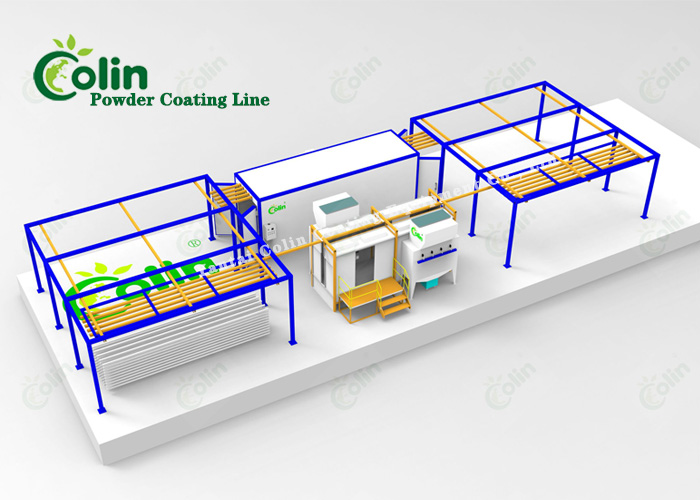
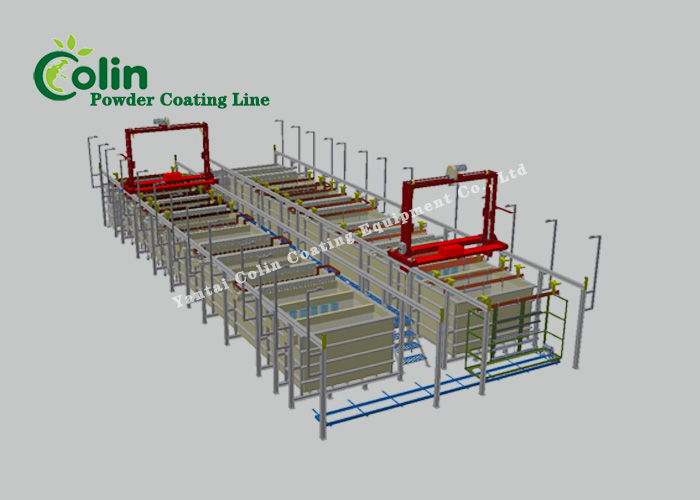
Surface preparation defines coating performance. In powder coating production lines, the pretreatment system is a crucial foundational step in ensuring the final coating quality, adhesion, and durability. The process involves degreasing to remove oils, etching or phosphating for micro-roughness creation, and chromate or non-chromate conversion coatings for corrosion resistance. Proper drying prevents defects like bubbles or pinholes.
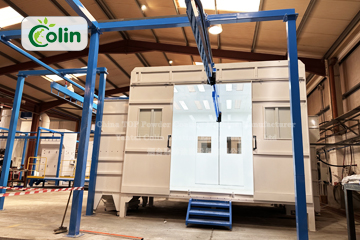
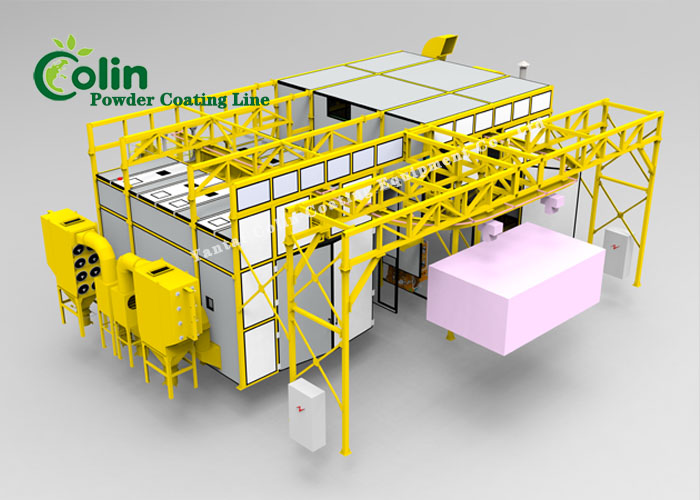
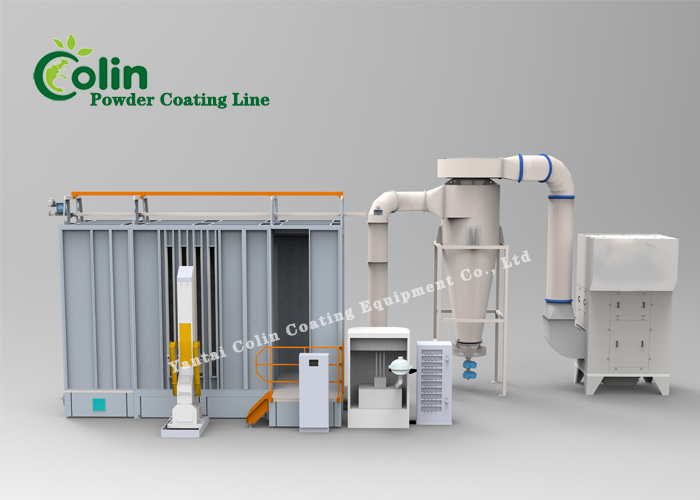
The powder application booth determines material efficiency and finish consistency. Powder coating booths provide a controlled environment for spraying operations while preventing powder spillover into the external environment. Manual booths offer flexibility for custom runs, whereas automatic systems enhance throughput consistency on complex geometries.
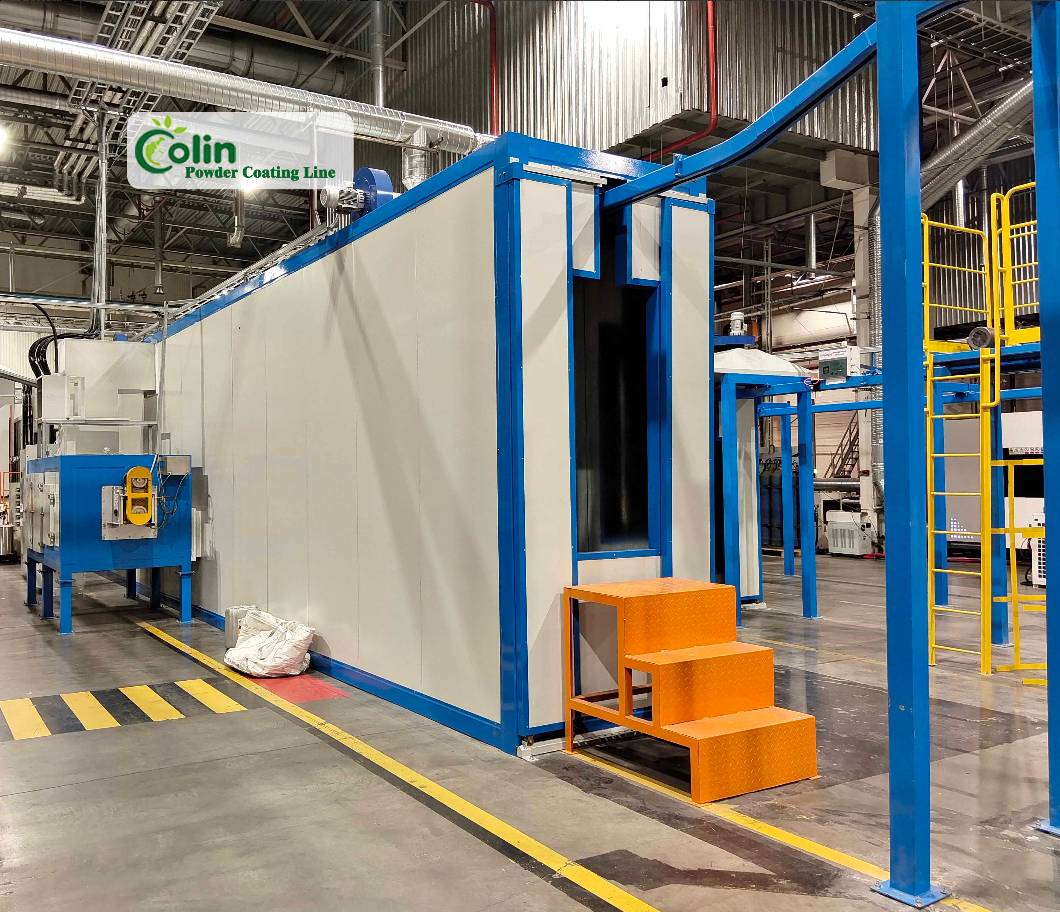
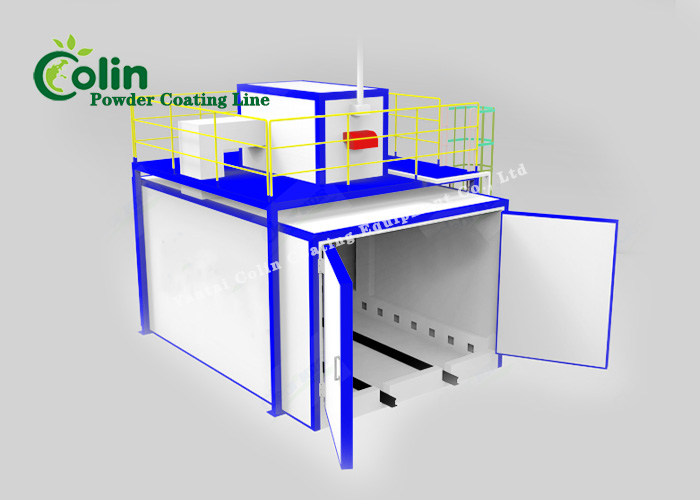
Curing ovens finalize film formation through controlled heating cycles. Powder curing ovens are responsible for melting, leveling, and cross-linking powder coatings electrostatically adsorbed on the workpiece surface through high-temperature baking. For aluminum substrates, optimal curing temperatures range between 160–210 °C depending on powder type.
Oven design impacts both energy consumption and thermal uniformity. The furnace body adopts a double-layer insulation design filled with high-density rock wool to reduce heat loss while maintaining temperature uniformity within ±5 °C. Intelligent PLC-based controllers monitor temperature curves in real time to prevent under-curing or overheating that could distort lightweight aluminum components.
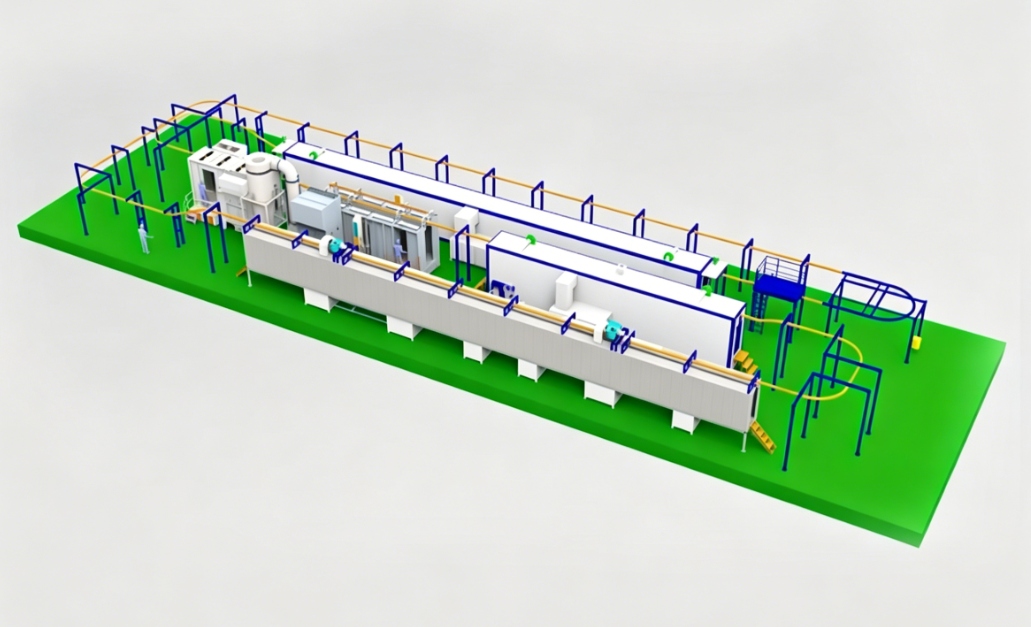
Automation transforms production reliability. Robotic arms ensure consistent coverage even on intricate geometries like extruded aluminum frames or curved components. Conveyor systems facilitate continuous flow from pretreatment through curing without manual intervention. Integration with real-time monitoring software enables automatic adjustments based on sensor feedback—enhancing process stability.
Some equipment is equipped with reciprocating lifting spray guns enabling precise coverage of complex structures such as deep cavities and corners, achieving film thickness uniformity error below 5 μm. Such precision exemplifies how an automatic powder coating line achieves high-quality finishes suitable for demanding industries like automotive or architectural aluminum fabrication.
Automated lines deliver measurable benefits:
Efficient layout planning minimizes material handling distances between stations. Balancing conveyor speed against desired film thickness prevents quality degradation at high throughput rates. Modular architecture allows scalability—expanding capacity without redesigning the entire system—ideal for manufacturers scaling up production gradually.
Sustainability drives innovation across modern facilities. Production efficiency is increased by 30–40% compared to traditional painting processes while energy consumption is reduced by approximately 30%. Low-energy curing ovens combined with heat recovery systems reclaim residual thermal energy from exhaust streams. Recyclable powders minimize waste generation while closed-loop air filtration maintains operator safety by keeping dust concentrations below regulatory limits.
Quality assurance depends on rigorous inspection protocols:
Digital traceability enhances accountability across production batches. Integrated MES platforms record parameters like oven temperature profiles or spray gun voltage settings for each lot produced. Over time, this dataset supports continuous improvement initiatives—refining process parameters based on historical performance trends.
Next-generation developments focus on high-performance powders offering improved UV stability critical for outdoor architectural applications. Compact line configurations now serve smaller facilities seeking industrial-grade results within limited space footprints without sacrificing efficiency or automation sophistication.
IoT-enabled sensors embedded throughout equipment enable predictive maintenance by detecting anomalies before failures occur. AI-driven algorithms dynamically adjust parameters such as spray rate or oven dwell time according to live feedback loops. Cloud-based dashboards allow remote supervision—empowering plant managers to oversee multiple automatic powder coating line installations globally from centralized control centers.
Selecting an experienced powder coating line supplier like Colin ensures access to advanced technology integration, certified quality systems, and comprehensive after-sales support essential for sustainable aluminum finishing operations. By combining intelligent automation with eco-efficient design principles, Colin’s aluminum powder coating line solutions deliver superior performance across diverse industrial sectors worldwide.
Contact us today to discuss customized solutions tailored to your production needs.
A: Colin combines over 15 years of expertise with international certifications including ISO9001 and CE compliance while offering full project lifecycle services from design through after-sales support.
A: Automation eliminates manual inconsistencies by integrating robotic applicators and conveyorized workflows that sustain continuous operation while optimizing cycle times for higher output efficiency.
A: Pretreatment removes contaminants like oil or oxide layers ensuring strong adhesion between the substrate and applied coating; inadequate cleaning can lead to premature failure under environmental stressors.
A: Advanced ovens employ double-layer insulation structures filled with rock wool along with intelligent PLC temperature control systems achieving ±2 °C uniformity while reducing energy losses significantly.
A: Yes. Colin provides fully customized 2D/3D layout designs adapting equipment configuration according to available floor space, workpiece dimensions, production volume targets, and environmental constraints.