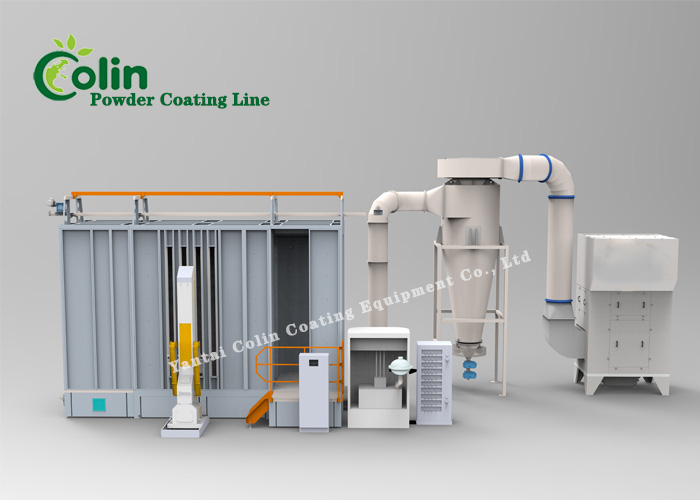
Powder Coating Line for Your Factory: Manual, Semi or Auto
Eren
30th October 2026
The selection of the best possible surface treatment setup is one of the key decisions that can be made by manufacturers. Knowledge of the manual, semi-automatic, and fully automatic powder coating line configurations will allow factory managers to choose the right equipment for their needs and budget.
A factory manager is usually confronted with an array of problems while modernizing his factory:
Striking a balance between production volume fluctuations and capital investment limits.
Overcoming labor shortages and dependence on highly skilled manual sprayers.
Minimizing material, energy, and environmental expenses.
It is necessary to possess profound technical knowledge of system capabilities, workflow schemes, and total cost of ownership in order to maneuver through all these factors. As the top custom powder coating line supplier, Colin utilizes many years of engineering experience in order to offer turnkey surface treatment solutions, including powder coating lines, powder curing ovens, powder coating booths, pretreatment systems, sandblasting booths, and ED coating systems.
Understanding the Core Dilemma: Volume, Budget, and Labor
When evaluating surface treatment performance, it is important to take into account the issue of the level of investment and expectations with regards to productivity levels. When deciding which type of powder coating system you should buy, the following factors must be considered: capacity, space, complexity, and growth prospects.
Assessing Production Volume Thresholds and Factory Scale
Various types of factory floor plans and capacities have different needs for metal fabrication and finishing workshops.
Space restrictions: The powder coating line for small factories should use maximum vertical space and have compact curing and spraying areas.
Production volume: Factories with continuous mass production processes should have enough capacity in the powder coating line for high-volume production to avoid bottlenecking in the finishing department.
Mixed batches: Operations that deal with mixed batch production processes should have a versatile powder coating line for mixed batch production.
Comparative Breakdown: Manual, Semi-Automatic, and Fully Automatic Systems
The correct configuration will depend very much on matching the abilities of the system to the number and variety of workpieces processed each day. Each manual powder coating system, semi-automatic powder coating system, and automatic powder coating system has its own benefits.
Manual Powder Coating Line: Low Cost and High Flexibility
Perfect for training programs that emphasize minimum start-up cost and color change frequency.
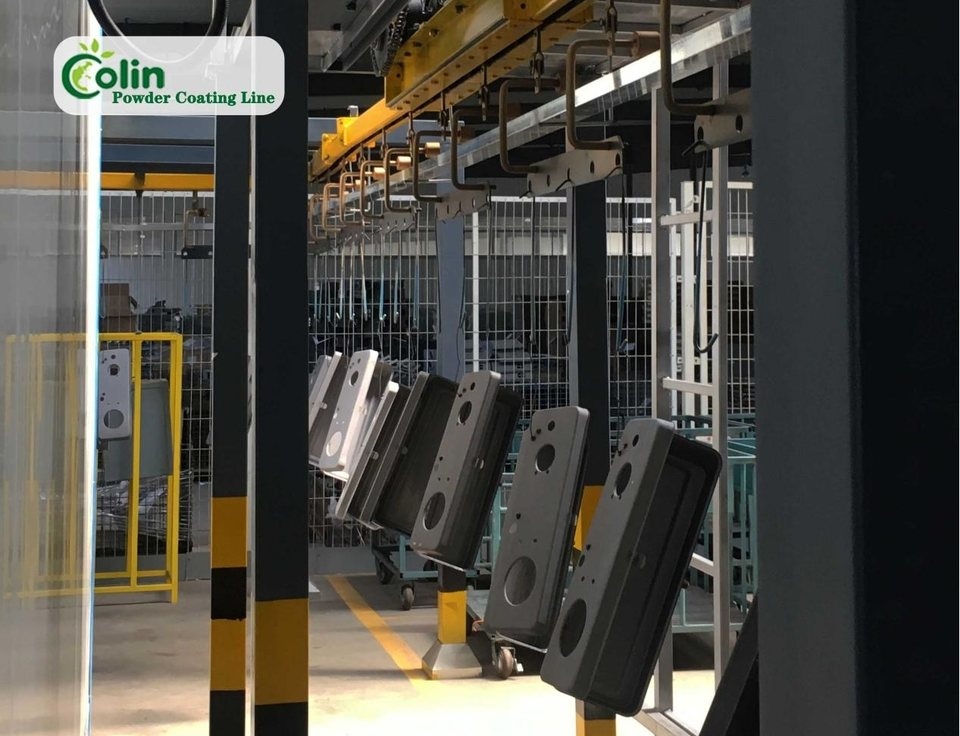
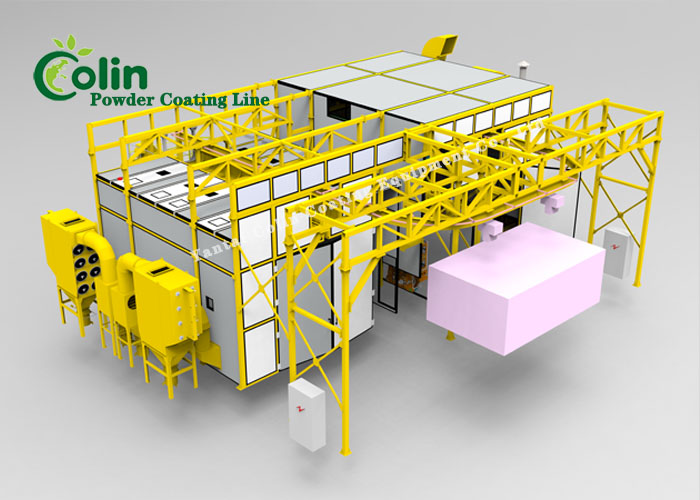
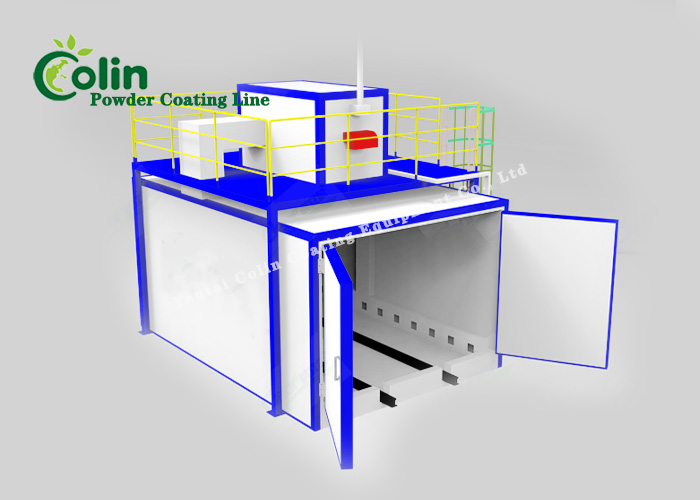
Process flow: The workers perform hanging, spraying in a powder booth, and transferring the parts to a box-type powder curing oven.
Usage case: A manual powder coating systemis ideal for custom metal fabricating facilities that manufacture large architectural pieces or different types of architectural hardware, where automation cannot provide enough flexibility.
System feature: High adaptability for complex shapes and low start-up cost make manual systems the best choice for start-up job shops.
Semi-Automatic Powder Coating Line: Balancing Labor and Output
Versatile option to bridge the transition between manual work and complete automation.
Workflow mechanics: Utilizes a hanging conveyor mechanism, automatic reciprocating spray guns, and manual touch-up booths for difficult corners.
Application context: Semi-automatic powder coating linesare Commonly used in aluminum profile treatment and medium furniture manufacturing industries, which operate on batches of 2 to 5 tons per day.
System benefit: It greatly alleviates manual effort, has a powder recovery rate of over 97%, and increases efficiency by over 50% compared to manual systems.
Fully Automatic Powder Coating Line: High Efficiency for Mass Production
Designed for constant industrial production with stringent requirements for coating uniformity and extremely high-volume throughput.
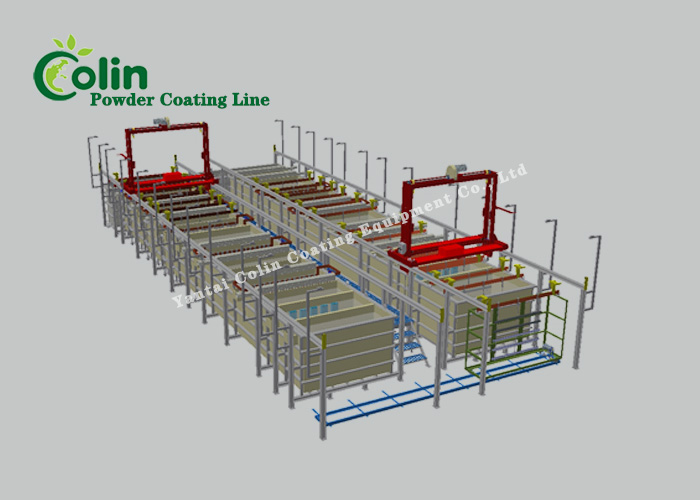
Work process mechanics: Integrated PLC-based systems utilize automated chemical pre-treatment, intelligent powder feeding systems, and automated convection curing ovens.
Use case: An automated powder coating systemis a must-have for manufacturing industries that produce in large quantities, such as household appliances, automotive parts, and marine structures such as yacht hull parts.
System benefits: Provides stringent film thickness uniformity with less than 5 μm error, low labor input of 1-2 supervisors, and zero wastewater pollution compliance.
Investment Realities: Cost vs. Long-Term ROI
Financial planning must look past initial price tags to evaluate overall operational savings and the return on equipment investment.
Analyzing Initial Setup Expenses and Operational Overhead
An appreciation of how each equipment level compares to productivity and material efficiency allows manufacturers to determine the suitable finishing option.
Low-end spending: The manual powder coating line is relatively cheap since it begins at the basic equipment level, but requires more labor costs in the long run.
Mid-range spending: The semi-automatic powder coating line is an intermediate cost, maintaining low capital costs while doubling productivity.
High-end capitalization: The fully automatic powder coating line involves high initial costs, but provides a quick return on investment due to high powder savings and low labor dependency.
Making the Choice: Which System Fits Your Factory?
Transitioning to advanced solutions requires a structured approach to layout design, production planning, and scalability. The right choice depends on whether operational priorities favor flexibility, balanced throughput, or continuous mass production.
Upgrading Paths and Tailored Manufacturing Solutions
A future-proof facility that utilizes modular technology and engineering expertise enables production capabilities to grow in pace with business needs.
Modular Scalability: Using a powder coating line automation upgrade means growing companies can add automated reciprocating spray systems and programmable logic controller touchscreens in stages.
Turnkey solutions: Colin offers complete turnkey services including 2D/3D plant layout design, manufacturing, installation, and operator training.
Engineering customization: Each and every automated powder coating system for metal is engineered based on the analysis of the substrate size and weight and curing capabilities to ensure perfect coating adherence and corrosion resistance.
Partnering with Colin for Turnkey Finishing Systems
Engineering custom finishing lines requires deep technical expertise, ranging from initial 2D and 3D layout design to precise on-site installation and commissioning.
Comprehensive Engineering and Lifecycle Support
Colin provides end-to-end services for optimal performance, ensuring maximum ROI from the get-go.
Custom Layout Design: Colin’s professional engineers create custom design layouts of 2D & 3D designs according to individual factory dimensions and curing parameters of workpieces’ weights.
Comprehensive Commissioning: Comprehensive commissioning of no-load and load ensures maximum efficiency of chain speed, drying tunnel temperatures, and spray gun powder flow.
Operators’ Training: Thorough training is provided for the effective management of machine operations, including their installation, maintenance, and safety.
Are you ready to step up the game? Contact Colin now by email to helen@colincoating.com or WhatsApp at +86 159 5357 2490 for consultation from engineering experts with transparent quotation for the factory.
FAQ
Q: How can I tell when my facility needs a manual or automated powder coating system?
A: It is determined mostly by the daily volume of parts, part geometry uniformity, and personnel availability. For facilities using low-volume, very customized parts, manual powder coating systems are better, whereas for high-volume, constant production, automated systems should be used.
Q: How quickly can the colors be changed on an automated powder coating line?
A: The advanced modular spray booths with multi-powder center supply and quick cleaning system are capable of color change, for example, from black to white, in 15-30 min.
Q: How does the workpiece pretreatment affect the quality of powder coating?
A: Workpiece pretreatment is essential for removing oil, rust, and contamination from substrate materials, such as steel or aluminum. It provides proper cleaning of the substrate and makes the powder coating process more effective.
Q: What are the options available for energy use in an industrial curing oven?
A: Industrial curing ovens may have different heating elements according to the local availability of power sources and cost efficiency, such as natural gas burners, electricity, and infrared.
We provide customized solutions. Please inform us of your workpiece material (such as iron, aluminum), maximum/minimum size, weight, shape complexity, and expected coating thickness and quality requirements. We have extensive experience in handling various workpieces and will provide the best design solutions.
The prices of production lines vary greatly due to differences in production capacity, automation level, configuration, and energy types. A basic semi-automatic line may start at tens of thousands of dollars, while a fully automated large-scale line may exceed hundreds of thousands of dollars. We provide free consultation services, and after understanding your specific needs, we will provide detailed solutions and transparent quotations.
Our standard quotation usually includes host equipment, domestic shipping costs, installation and commissioning, on-site operation and maintenance training. The foundation of the factory building, external water, electricity, and gas pipeline connections, lifting tools, and local approval fees are usually the responsibility of the customer. We will provide detailed site preparation guidelines and interface requirements, and list all items in the contract without any hidden costs.
The typical installation and debugging cycle is 4-8 weeks, depending on the complexity of the production line. The factory building needs to provide stable electricity (voltage/power), compressed air (clean and dry), and necessary exhaust channels. We will provide detailed factory layout and foundation drawings in advance, and dispatch engineers to provide on-site guidance
We provide a one-year warranty for standard equipment, with longer warranty periods for core components such as electrostatic generators and PLCs. We provide 24/7 online technical support. For emergency faults, we promise to respond within 2 hours and quickly resolve them through remote guidance or coordination of local service resources. We have service outlets/partners in major markets.