5 Bottlenecks in Powder Coating Lines And How Colin Solves Them
5 Bottlenecks in Powder Coating Lines And How Colin Solves Them
Eren
5th November 2026
Understanding Bottlenecks and Partnering for Finishing Excellence
Recognizing operational challenges is a key requirement to optimize the efficiency of industrial powder coating processes and ensure product quality. The following guide provides an overview of five major issues related to powder coating lines and shows how Colin can help solve them.
Overcoming Throughput Barriers in Modern Coating Operations
Contemporary coating lines have to produce high quantities while adhering to coating standards and environmental regulations.
Production Inefficiencies: The ongoing issues with powder coating production line inefficiencies, including misaligned conveyor speeds, problems with heating ovens, and time-consuming line changes, impede the manufacturing capabilities of the entire factory.
Importance of Efficiency: A powder coating production line optimization strategy is essential for industrial producers striving for reduced downtime and enhanced efficiency.
Critical Approach: Overcoming core impediments helps optimize the throughput of the powder coating production line, along with decreased defect rates and increased manufacturing efficiency.
Colin – Leading Innovator in Coating Technology
Colin is the leading Chinese company providing high-quality surface finishing systems to the world.
Manufacturing Expertise: Being an experienced manufacturer of automated powder coating lines for more than 15 years, Colin combines R&D, production and international service.
International Expertise: With 50+ patents and 100+ countries served, Colin offers a unique solution that is guaranteed by 24/7 technical support.
Turnkey Solutions: Being the reputable turnkey supplier of powder coating lines, Colin offers you full range of services, from AI-based design to installation.
Pretreatment Inefficiencies and Conveyor Speed Disruption
Inefficient surface preparation and inconsistent conveyor speed result in basic delays, which result in coating errors and unplanned stops in the production line. Early diagnosis of these problems can greatly improve production capacity.
Bottleneck 1: Suboptimal Pretreatment System Efficiency and Surface Defects
Incomplete surface cleaning and chemical conversion lead to poor powder bonding, resulting in blisters, pinholes, and part rejection costs.
Lag in Pretreatment: Oils and scale in the metal substrate result in incomplete adhesion of powder coating using the electrostatic process.
Colin’s Fix: Colin is able to enhance the efficiency of powder coating pretreatment by automating the spray wash and immersion tanks with online bath analysis.
Application and Effect: Colin’s chemical pretreatment and sandblasting booths are used in the production of hardware tool products and yacht components for rust removal.
Bottleneck 2: Unsynchronized Conveyor Speed and Line Stoppages
Uncontrolled conveyor chain speeds result in production imbalance, which results in either a congested curing oven or an idle spray booth.
Conveyor Stops: Chain jerking and uneven loading result in frequent stops that increase downtime.
Colin’s Solution: Colin provides conveyor speed optimization through PLC-controlled variable frequency suspension chains and load balancing sensors.
Application and Results: Applied on high-production lines for refrigerators and home appliances, Colin’s intelligent conveyors maintain continuous flow, resulting in powder coating line downtime reduction.
Spray Booth Changeovers and Thermal Curing Delays
Color changes and slow oven warm-ups contribute to inefficiencies that prevent smooth coating operations. Better booth cleaning and improved heating can assist manufacturers in increasing production speeds while still maintaining high coating quality.
Bottleneck 3: Extended Color Changeover Times and Powder Recovery Loss
The manual cleaning process can take several hours and leaves powder coating finishing lines standing idle while powder is wasted during color changes.
Changeover Delays: The rough surface of the booth walls traps the powder and therefore increases changeover time.
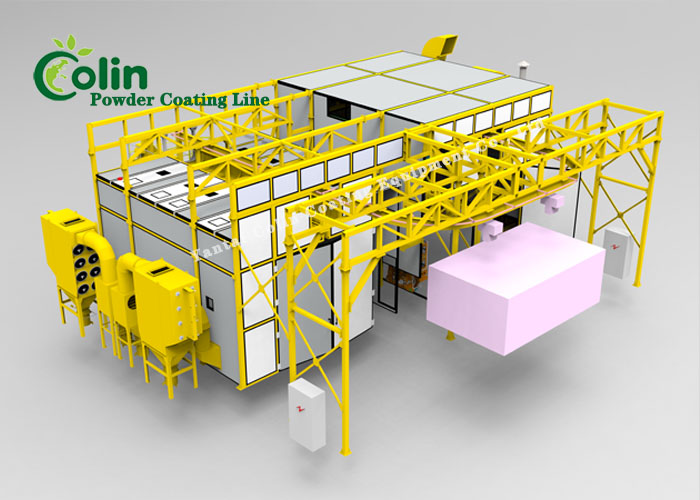
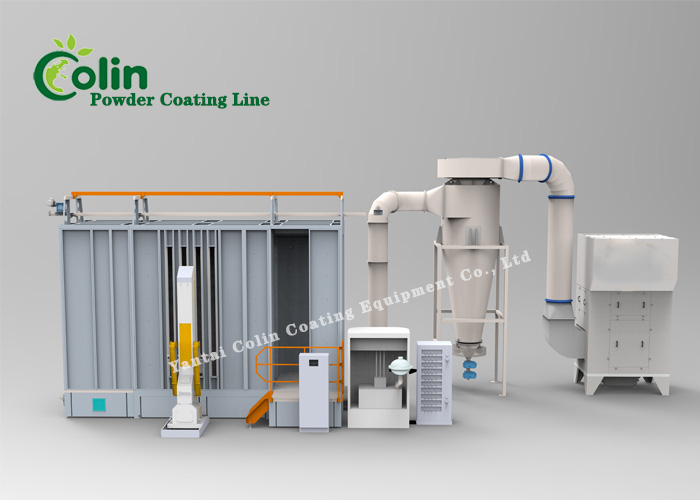
Colin’s Solution: Colin makes powder recovery from powder coating boothsbetter by creating a smooth structure made up of stainless steel along with cyclones that help to recover 98% or more of the powder used.
Application & Effectiveness: Created especially for manufacturers of aluminum profiles and metal furniture who receive orders in small batches, Colin’s quick-to-clean booths help achieve changeovers in less than 20 minutes.
Bottleneck 4: Powder Curing Oven Temperature Lag and Energy Inefficiency
Uneven oven heat and prolonged heating time will not allow the powders to polymerize, thus posing a significant obstacle during production.
Lagging Heat: Due to insufficient heat transfer in ovens caused by poor insulation, there is a powder coating curing oven production challenge, resulting in under-cured powder coatings.
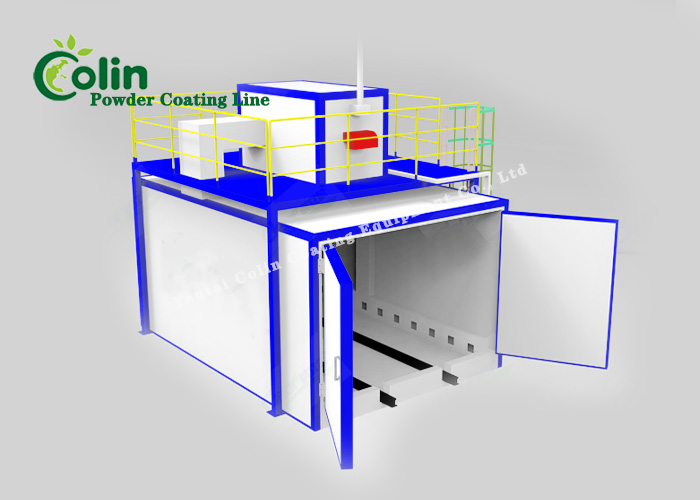
Colin’s Approach: Colin provides curing ovens with SUS304 stainless steel, highly dense rock wool for insulation, and accurate burners with ±1°C PLC temperature control.
Application & Effect: These curing ovens are utilized in heavy equipment and automotive chassis assembly lines where fast heat transfer is facilitated, allowing manufacturers to boost powder coating line production without increasing energy consumption.
System Automation and Overall Line Optimization
Combining isolated coating processes into a complete system is required in order to maximize efficiency and maintain high coating standards. A properly set-up customized powder coating line synchronizes pretreatment, conveying, application, powder collection, and curing.
Bottleneck 5: Lack of Automation and Poor System Coordination
Manual spraying is the cause of irregular coating thickness, fatigue, and irregular production cycles.
Manual Dependency: Manual spraying can’t effectively coat parts of irregular geometry due to increased powder wastage and labor.
Application & Effect: These are employed for the manufacture of precise automotive parts where Colin’s automation provides complete optimization of the powder coating production line.
Strategic Synthesis: Driving Long-Term Powder Coating Line Efficiency Improvement
Unification of advanced modules in equipment in a control system leads to the transformation of ordinary finishing facilities into highly productive manufacturing facilities. For sustainable improvement in powder coating line efficiency, coordination between equipment design, process control, and technical support is key.
Holistic Approach: The integration of automated chemical pretreatment, quick-change booth, efficient oven, and E-coating gives rise to a strong finishing facility.
Return on Investment: Colin’s turnkey finishing systems provide sustainable improvements in powder coating line efficiency, increasing production by over 50% and reducing energy consumption by 30%.
Advanced Finishing: Innovations, artificial intelligence, and lifelong technical support bring about sustainable competitive advantage for international clients.
Transforming Your Finishing Operations with Colin Solutions
Upgrading your powder coating line with Colin’s advanced technology helps eliminate operational friction, improve production consistency, and maintain superior finishing quality.
Request Your Customized Finishing Line Consultation
Collaborating with a seasoned OEM finishing line manufacturer means that your manufacturing facility will be designed for optimal efficiency and expansion.
Custom Engineering: Want to get rid of the bottlenecks in your line? Reach out to Colin nowand get your custom 2D/3D factory layout drawing and technical quotation for your custom powder coating line.
Turnkey Partnership: Enjoy complete lifecycle services, expert installation, and 24/7 technical support from your turnkey powder coating line manufacturer, Colin.
FAQ
Q: What are the main reasons behind bottlenecks in powder coating lines during high production rates?
A: Some of the reasons behind bottlenecks are long color changeover processes in spray booths, unequal heating in curing ovens, inconsistent pretreatment bath chemistry, and different conveyor chain speeds. Understanding the bottleneck areas is crucial for powder coating production line optimization.
Q: What methods can be used to minimize the powder coating line color changeover process?
A: Using modular spray booths made up of non-stick walls, automated powder feeders, and efficient large cyclone recovery systems can help reduce the color changeover process to less than 20 minutes. This process will also help increase powder coating booth powder recovery.
Q: Why is it important to have an efficient pretreatment system?
A: An efficient automatic spray or immersion pretreatment system not only removes the oil and scale but also forms a uniform conversion film to provide good powder coating adhesion without any peeling or pinholes. This will also reduce coating rework and production downtime.
Q: What is the effect of optimizing conveyor speeds on the throughput capacity of the entire coating line?
A: Optimized speeds between conveyor chains and the automated spray elevators avoid any jamming of parts or starvation of lines, thus achieving maximum part density on the line with uniform thickness of film. Powder coating line speed optimization leads to increased productivity on the lines.
We provide customized solutions. Please inform us of your workpiece material (such as iron, aluminum), maximum/minimum size, weight, shape complexity, and expected coating thickness and quality requirements. We have extensive experience in handling various workpieces and will provide the best design solutions.
The prices of production lines vary greatly due to differences in production capacity, automation level, configuration, and energy types. A basic semi-automatic line may start at tens of thousands of dollars, while a fully automated large-scale line may exceed hundreds of thousands of dollars. We provide free consultation services, and after understanding your specific needs, we will provide detailed solutions and transparent quotations.
Our standard quotation usually includes host equipment, domestic shipping costs, installation and commissioning, on-site operation and maintenance training. The foundation of the factory building, external water, electricity, and gas pipeline connections, lifting tools, and local approval fees are usually the responsibility of the customer. We will provide detailed site preparation guidelines and interface requirements, and list all items in the contract without any hidden costs.
The typical installation and debugging cycle is 4-8 weeks, depending on the complexity of the production line. The factory building needs to provide stable electricity (voltage/power), compressed air (clean and dry), and necessary exhaust channels. We will provide detailed factory layout and foundation drawings in advance, and dispatch engineers to provide on-site guidance
We provide a one-year warranty for standard equipment, with longer warranty periods for core components such as electrostatic generators and PLCs. We provide 24/7 online technical support. For emergency faults, we promise to respond within 2 hours and quickly resolve them through remote guidance or coordination of local service resources. We have service outlets/partners in major markets.

 Eren